
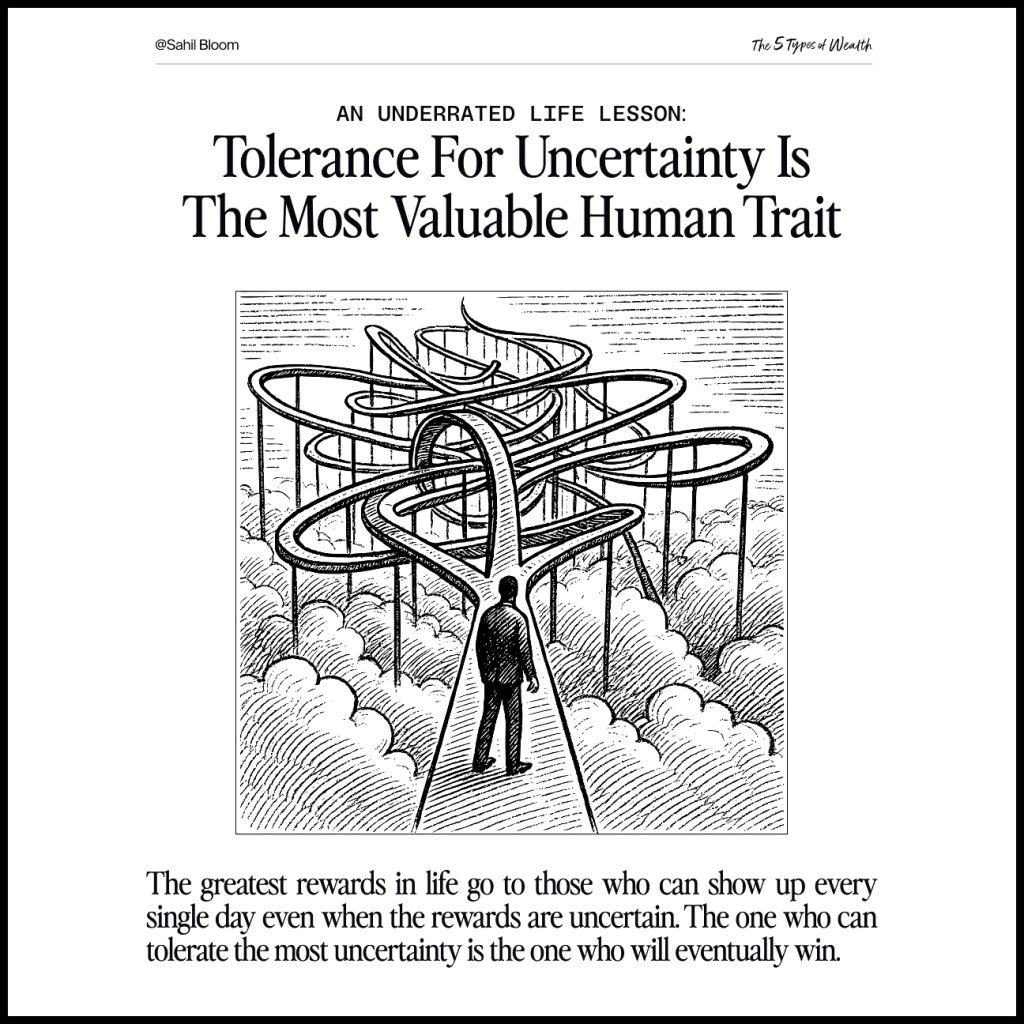
We’re feeling more independent after our long holiday weekend, and now dependent on Workday for all of our systems, including timesheets and performance management. While there’s some uncertainty in this new tool, we get the chance to gain efficiencies and simplify tasks that we could not experience before with our unconnected solutions, so our tolerance for uncertainty now will pay off later.
Let’s also dabble in brave leadership, the transformational power of gratitude, and writing our to-don’t list.
Lastly, we are still looking for raffle prizes for our event in August; if you or your department has something to contribute, we would really appreciate it!
https://forms.gle/abzi7ekG5TpbcxPJ6
:: Image of the Week
 :: Mental Health and Self-Care
Exploring the “New Happy” Philosophy with Stephanie Harrison
Stephanie Harrison is an expert in the science of happiness, author of the international bestseller
New Happy: Getting Happiness Right in a World that’s Got It Wrong (2024), and creator of the new happy philosophy.
In
New Happy, Stephanie argues that the secret to happiness is helping others, and that by adopting this philosophy in our lives, we will be able to solve the world’s toughest problems.
Stephanie leads an international movement devoted to spreading the New Happy philosophy. Her organization, the New Happy, reaches millions of people around the world every month, offering award-winning art, a podcast, a newsletter, articles, and unique tools for building happiness.
https://podcasts.apple.com/us/podcast/episode-69-exploring-the-new-happy-philosophy/id1632465813?i=1000709075001
:: CSN’s Book of the Week Recommendation
Brave Leadership (Revised and Updated in Paperback)
Kimberly Davis has rereleased her epic book from 2018 with new content.
While we may think that we need to follow some kind of prescription to get results, the most amazing leaders are those who dare to be their true selves, powerfully. People want to give them their best. But in a business world that’s so competitive and uncertain, how do you connect with others more authentically to tap into their elusive want?
Updated for a post-COVID world, Brave Leadership is the essential guide for leaders in today’s ever-shifting world. Wherever you are in your leadership journey—new, seasoned, young, or old—if you aspire to be the best leader you can be, then this book is for you. It will help you:
- Uncover your barriers to brave
- Escape overwhelm and frustration and learn to manage stress and anxiety
- Prepare for high-stakes meetings and conversations
- Have the influence you want to have
- Set the direction of your career
- Connect powerfully
- Feel more confident, courageous, satisfied, and purposeful
- Tap into the want of the people you lead to get the results you need
On a quest to make these powerful conversations more accessible, professional-actress-turned-leadership-educator Kimberly Davis shares the transformative tools she uses in her workshops to help thousands of leaders worldwide. Drawing from years of working with leaders of all experience levels and industries and the latest research in psychology, sociology, business, and the arts, this provocative and inspiring book bridges traditional business how-to with a personal development approach to demystify what it takes to be the brave leader you were born to be.
Note: the new version is only in paperback; if you choose the hardcover you will receive her original copy from 2018.
https://a.co/d/271HzCV
Win a copy of this book, and an exclusive access to Kimberly’s online training program at the
CSN 10-year celebration August 4th!
“The pressure of adversity does not affect the mind of the brave man . . . It is more powerful than external circumstances.” – SENECA
:: Work Culture & Team Development
Practical Ways to Be a Great Team Player
Smart, Strategic, and Still Easy to Work With? Yes, You Can.
You know that person everyone wants on their team? The one people describe with a big smile and a big thumbs up because, “they’re just
so easy to work with” Yeah, be that person.
Whether you’re navigating
matrixed teams, global time zones, or just trying to make your next meeting suck less—being easy to work with isn’t about being a pushover. It’s about
presence,
clarity, and
follow-through. Here’s how to get there:
https://letsgrowleaders.com/2025/05/15/how-to-be-so-easy-to-work-with/?vgo_ee=bBBag%2BwOBU0RvRq9qwVONVs2yecfNn3%2BckNPKJ4jbgLeh2z5%3A8NWlxAGyFNQglBbMVot4wxm%2BjVWszyBJ
:: Gratitude and Recognition
The Amazing Transformational Power of Gratitude
Join Jeremy Jons and Kevin Monroe as they discuss the power of gratitude in your work and personal life.
3 big ideas discussed in this episode:
BIG IDEA #1: Gratitude Changes Everything… Because it shifts what we see. When we practice gratitude, it transforms our lens on life – shifting us from scarcity to abundance, from criticism to appreciation. This fundamental change in how we see the world naturally alters how we respond to everything and everyone around us.
BIG IDEA #2: Gratitude is Better Together. While private gratitude practices like journaling are valuable starting points, the real magic happens when we share our gratitude with others, creating ripples of positive impact and deepening our connections in ways that personal practices alone cannot match.
BIG IDEA #3: Gratitude Experienced is Better Than Gratitude Explained. You don’t need to fully understand the science or philosophy behind gratitude to benefit from its transformative power – simply practicing gratitude, even imperfectly, opens the door to experiencing its profound impact on your life and relationships.
https://ideas-impact.castos.com/episodes/466-the-amazing-transformational-power-of-gratitude-kevin-monroe
“My grief has inside it a forest, thriving, evergreens of all ages, each tree grown from a seed of gratitude… And so I keep planting trees. I am learning to trust the shade…” – Rosemary Wahtola Trommer
:: Managing Up
4 Critical Communication Skills for Managing Up with Style and Grace
Managing up well will build your influence, reduce stress, and improve your team’s performance.
“How do I change my boss?” This is one of the most frequently asked questions we hear from participants in our leadership development programs. So, let’s get this out of the way:
You can’t change your boss. No matter how much you might wish otherwise,
you can’t control another person’s behavior—especially someone with more formal authority. But what you
can do is influence. Managing up means strengthening the relationship, communicating more effectively, and creating the conditions for more productive, strategic conversations. You can use four communication skills to be more influential, get more done, and reduce your stress:
- Practice Two-Level Thinking,
- Communicate with Data and Insight
- Say Yes to Say No
- Ask Permission When Offering Critical Feedback
See the whole article at:
https://letsgrowleaders.com/2025/05/05/managing-up-skills/?vgo_ee=KieuO0C2o2%2FnSb8sB8p93j4LP9IExXmZJlBBrFsfl4ZVXICG%3AAMa0iKdF29Ftwc1%2FJuWC5wJ2p8nc3sKZ#two%20level
We are what we repeatedly do. Excellence, then, is not an act, but a habit. – Will Durant (paraphrasing Aristotle)
:: Trust, Psychological Safety & Belonging
Navigating Conflict and Building Psychological Safety at Work
In episode 40 of the Better @ Work podcast, Cathal Quinlan welcomes back Amy Gallo, co-host of HBR’s Women at Work podcast and the brilliant author of ‘
Getting Along: How to Work with Anyone (Even Difficult People)’ to discuss conflict, communication and navigating challenging workplace dynamics.
Amy and Cathal discuss:
- Why emotional regulation is so important and how to create space in challenging situations
- Establishing team psychological safety
- The power of euphoric thinking
Tune in to learn how to navigate emotionally charged and challenging situations in work and life.
https://podcasts.apple.com/gb/podcast/navigating-conflict-and-building-psychological-safety/id1619332673?i=1000696019044
Common Misconceptions about Psychological Safety
“Psychological safety—a shared belief among team members that it’s OK to speak up with candor—has become a popular concept. However, as its popularity has grown, so too have misconceptions about it,” say Amy C. Edmondson and Michaela J. Kerrissey in
this Harvard Business Review article that seeks to set the record straight about what psychological safety
is, and what it
isn’t. Leaders who can effectively communicate about the concept will be better equipped to “stop incorrect assumptions before they gain destructive force, and keep people focused on the value to be gained from candor.” The authors share six common misconceptions in the full article, and here are three.
Misconception 1 – Psychological Safety Means Being Nice. “Wanting to be nice, people avoid being honest and, whether they realize it or not, collude in producing ignorance and mediocrity. Because without candid feedback and open sharing of information—bad and good—coordination, quality, and learning on a team or a project suffer.”
Misconception 2 – Psychological Safety Means Getting Your Way. “Psychological safety is about making sure leaders or teams hear what people think. It’s not about forcing them to agree with what they hear. The goal is to reach a good decision or prevent a defect in a product. It’s helpful to think of psychological safety not as a gift for one participant but rather as an environment for the whole team.”
Misconception 3 – Psychological Safety Requires a Trade-Off with Performance. “Psychological safety and accountability are distinct dimensions. To decide which is more important is to impose a false dichotomy. When both are low, performance and morale clearly suffer . . . In any uncertain environment, superb performance requires a commitment to both high standards
and psychological safety.”
Get the full story, including instructions for countering each of the six common misconceptions,
here.
**For more on this, explore our coverage of a conversation between Doug Conant and Amy C. Edmondson on psychological safety, “It’s Not All Fun and Games and Ice Cream.”
“Nobody cares how much you know, until they know how much you care.” – THEODORE ROOSEVELT
:: Communities of Practice
Career Development Community
UW–Madison is committed to help employees grow in and develop their careers. The Career Development Community of Practice was created to provide employees with an opportunity to meet with each other to discuss and share information, resources, and experiences related to careers.
Career Development Community of Practice:
https://hr.wisc.edu/career-counseling/career-development-community/
:: Productivity and Innovation
Build Your To-Don’t List
If you want to change the world, do less. Those of us who want our work and lives to matter tend to get over-committed, which is actually counterproductive to our impact. By making a To-Don’t list, we can recognize things we do because we think we ‘should’ or we’ve just ‘always done’. Stopping those activities frees up time, attention, energy, and money to do things more closely aligned with the positive impact we most care about having. See this handy resource from
Nell 3D.
https://uwmadison.box.com/s/n8axumd1jd4590eruyc0ytotlzlsfu8i
:: Take Five*
*Note: CSN occasionally adds “Take Five” articles to take you off the beaten path. Articles are about local or regional areas of interest, but not necessarily focused on leadership development. The intent is for you to take a break from being a leader and relax for a moment!
Serious Volley
This
Take Five is actually just 4:08 — of the longest badminton volley recorded. You think you have a lot going on? Watch a 211-shot rally at the Malaysia Masters badminton tournament here. These players had some serious focus and athleticism for this amazing point in their match.
https://x.com/bs_prasad/status/1929735404116496694?s=51&t=zfRP7jCsox63EJ_38cSh8Q
:: Upcoming Events
Network With Your Peers. Listen to Inspirational Speakers. Win Prizes!

We’re less than a month from our special event featuring a livestreamed visit with international speaker
Rachel Druckenmiller!
“UNMUTE Yourself equips supervisors to break free from self-silencing and lead with greater courage, influence, and authenticity. Rachel Druckenmiller shares her powerful V.O.I.C.E. Method and practical strategies to help you show up, step up, and say YES!”
Join us for Rachel, and stay for networking with your peers on campus, and to look back at some of the successes CSN has enjoyed in the past decade!
We’ll serve light refreshments and snacks, and have exclusive raffle prizes and giveaways for attendees. Don’t miss this chance to celebrate your leadership network’s anniversary!
Date: August 4, 2025
Time: 2:00 – 3:30 pm
Location: DeLuca Forum, WID
Register here:
https://go.wisc.edu/63wy44