Planners’ Picks — November 25, 2025
 We’re all about giving thanks this week in our leadership journey. We’re also checking our blind spots, putting hope into practice, and asking more questions this week in Planners’ Picks.
We also want to say “WELCOME!” to the newest graduating class of Principles of Supervision and Management (PSM) students from campus! I enjoyed getting to chat with you last week at your final class and we’re excited to engage with you more in CSN events.
:: Image of the Week
We’re all about giving thanks this week in our leadership journey. We’re also checking our blind spots, putting hope into practice, and asking more questions this week in Planners’ Picks.
We also want to say “WELCOME!” to the newest graduating class of Principles of Supervision and Management (PSM) students from campus! I enjoyed getting to chat with you last week at your final class and we’re excited to engage with you more in CSN events.
:: Image of the Week
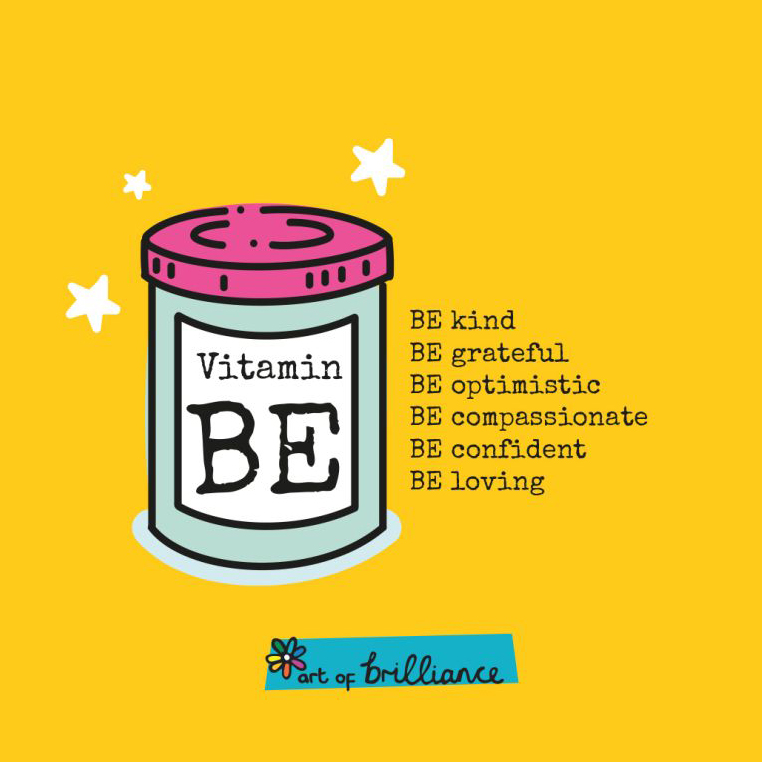 Be grateful this week for all you have and for those who help you be your very best every day.
“When it comes to life, the critical thing is whether you take things for granted or take them with gratitude.” — G. K. Chesterton:: LinkedIn Learning Changes in Service
LinkedIn Learning now Integrated with Workday Learning
As a UW—Madison employee, you have access to thousands of courses and personalized learning recommendations on LinkedIn Learning available to you—on your schedule, from any device. What’s changing The LinkedIn Learning catalog is now integrated with Workday Learning. Most UW–Madison employees will lose access to the current instance of LinkedIn Learning on December 1, 2025. You’ll still have access to the service through Workday Learning, but your learning history won’t carry over to your Workday Learning transcript. How to keep your LinkedIn Learning history If you want to keep your learning history, follow the steps below to connect your LinkedIn Learning account to your personal LinkedIn profile BEFORE December 1, 2025.- Step 1: Connect your LinkedIn profile in the previous version of LinkedIn Learning
-
Step 2: Connect your LinkedIn profile to the Workday-integrated LinkedIn Learning. Follow the steps in this resource: LinkedIn Learning Course History
-
(Note: some of you might already be linked — you will still want to toggle on the “Sync my learning activity from other accounts” option.)
The Power of Gratitude – Building a Gratitude Practice
Dr. Mick Miyamoto recently retired following a 37-year career in student affairs that took him to several UW System campuses, including UW–River Falls, UW–La Crosse, and the University of Dubuque, where he spent nearly nine years as vice president and dean of student life. For the last four years of his career, he served at his alma mater, UW–Madison, most recently as special projects coordinator for Student Affairs. A former football coach and art educator, Miyamoto earned his bachelor’s degree in art education and a master’s degree in college student personnel from UW–La Crosse and a Ph.D. in higher education administration from UW–Madison in 1993. Throughout his career, he has been recognized for his warmth, compassion, and dedication to helping students grow into responsible and caring adults. Miyamoto’s philosophy centers on building relationships and helping young people through their psychosocial development. He has facilitated restorative justice circles for students, promoted mindfulness practices across campus, and emphasized the importance of being present and genuinely listening. Inducted into the Wisconsin Football Coaches Hall of Fame in 2016, he has continued to mentor and inspire students, colleagues, and future Student Affairs leaders. In retirement, he plans to volunteer, create pottery, and spend time with his family. Buzz Kemper has worked as a recording engineer, producer, sound designer, and live sound engineer for numerous local, national, and international entities and artists. As a voice actor, he has been heard on numerous audiobooks and film narrations, as well as projects for Time Warner, American Family Insurance, Overture Center, Promega, the Wisconsin DNR, and many others. https://badgertalks.wisc.edu/badger-talks-podcast/?_hsmi=390354938“Hope and gratitude are the two sturdy pillars upon which a life well‑lived must rest.” — Elisabeth Kübler‑Ross
Hope in Practice: Individuals and Organizations Are More Likely to Thrive when Passive Expectations Become Renewable Actions
In most contexts, hope is a desire for something better. An aspiration that exists somewhere between a gentle wish and a bold dream, it’s rich enough to produce infinite movies and love songs but will never qualify as an effective workplace strategy. Fortunately, our research this year establishes a model that transforms hope from a passive state into an active practice, fueling growth and change. Such functional, working hope capitalizes on individual agency while at the same time drawing on the strength and support of teams and leaders. Organizations that embrace this approach don’t just help more employees reach their goals. They connect everyone to a more hopeful future. Read O.C. Tanner’s report on Hope here: https://www.octanner.com/global-culture-report/2026-hope-in-practice Bonus: Researchers from the O.C. Tanner Institute explored how everyday inspiration and a practice of hope can elevate employee wellbeing, resilience, and performance. They shared insights on transforming hope into an active practice and discussed how inspired employees drive innovation and great work. Want to see the webinar, take notes, or share it with your team? View it on-demand here: https://www.octanner.com/webinars/how-practicing-hope-and-inspiration-elevate-the-employee-experience :: Self-Leadership DevelopmentHow to See What Others Miss, with Kirstin Ferguson
Kirstin Ferguson has been recognized globally by Thinkers50 as one of the top 50 management thinkers in the world and is the recipient of the 2023 Distinguished Leadership Award. She was an officer in the Royal Australian Air Force, and then went on to lead an international consulting firm as CEO, before serving on the boards of major publicly listed, private, and non-profit organizations. She is the author of Women Kind, Head & Heart, and her newest book Blindspotting: How to See What Others Miss (Amazon: https://amzn.to/4o6wQOw). If we stop to think about it, almost all of us recognize that we have blind spots. Given that reality, anything we can do that helps us see what others might miss will help us lead better. In this conversation, Kirsten and I explore the mindsets and practices that will help us uncover more of our blind spots. Key Points • Experts are better at knowing when they are right, but also less likely to show appropriate doubt when they could be wrong. • There’s a time to be a seeker and a time to be a knower. Both are important in different situations, but leaders in many situations would benefit from more seeking. • Blindspotting is about calibration, not hesitation. • Accept your intellectual limitations. A key way to do this is saying these four words more: “I don’t know yet.” • Disentangling your ego will help your blind spot better. Shift away from your pride a bit by separating yourself from your knowledge and expertise. • Hunt down your biases. Admitting they exist is step one. Model vulnerability by talking about your past mistakes both with yourself and with others. https://www.youtube.com/watch?v=IUKxa_aJFoY“Mistakes are the portals of discovery.” – James Joyce in Ulysses
How to Identify Your Leadership Strengths
What are your strengths as a leader? Write down what you think your top five leadership strengths are. Then, ask a few of your peers to share what they feel your top leadership strengths are. Do they match up with what you identified? This simple exercise can uncover a lot for leaders. Maybe you’ll learn that what you thought were strengths your coworkers did not see as your top strengths. Or maybe your coworkers see strengths in you that you didn’t realize was one of your strong points. See this post from CPED on more ways to assess your strengths and be a more effective leader. https://blog.uwcped.org/how-to-identify-your-leadership-strengths/“The best opportunities go to people whose reputation got them picked before anyone else knew the opportunity even existed.’ – Shane Parrish:: Communication
What Are the 3 Most Important Words for Leaders?
“I don’t know.” These words open the door to humility and collaboration. Great leaders aren’t the smartest in the room—they’re the ones who bring out the brilliance in others. Build that culture, and you create happier teams, stronger companies, and thriving communities. Learn more on this episode with Garry Ridge on the Love in Action Podcast! Listen to the full episode here: https://bit.ly/4n6GgsqWhy Good Leaders Ask Great Questions
In today’s fast-changing world, the most successful leaders do not have all the answers. They’re the ones who ask the best questions. Yet many leaders get stuck in what I call Zones of Certainty. This is when confidence in their own perspectives can blind them to insights from others. But there is a way for them to open themselves up to new perspectives. Here are four practical pathways that leaders can use to increase their curiosity: https://www.inc.com/fast-company-2/why-good-leaders-ask-great-questions/91225922 :: CSN’s Book of the Week RecommendationManaging Transitions: Making the Most of Change
The business world is transforming. Stories of layoffs, bankruptcy, mergers, and restructuring appear in the news every day. When these changes hit the workplace, the actual situational shifts are often not as difficult for employees and managers to work through as the psychological components that accompany them. Indeed, organizational transitions affect people; it is always people who have to embrace a new situation and carry out the corresponding change. The job of managing workplace change can be difficult; managed poorly, the result can be disastrous to the morale and stability of the staff. As veteran business consultant William Bridges explains, successful organizational change takes place when employees have a clear purpose, a plan for, and a part to play in their changing surroundings. Directed at managers on all rungs of the proverbial corporate ladder, this expanded edition of the classic bestseller provides practical, step-by-step strategies for minimizing the disruptions caused by workplace change. It is an invaluable managerial tool for navigating these tumultuous, uncertain times. https://a.co/d/bDqd5MT“Businesses often forget about the culture, and ultimately, they suffer for it because you can’t deliver good service from unhappy employees.” – Tony Hsieh, CEO of Zappos:: Curiosity
What 75,000 People Regret
Regret is isolating. It makes us feel uniquely foolish and short-sighted. But when we tell someone our regret, we discover that we’re not alone — because everyone feels behind in some way. Jason Feifer asked what people regretted doing or not doing in their past, and got 75,000 responses. He divided them into five categories and has some insights below. What do you regret? Maybe it’s time to let it go. https://www.jasonfeifer.com/what-75000-people-regret/“Curiosity is a team sport.” -Jeff Wetzler:: Take Five *Note: CSN occasionally adds “Take Five” articles to take you off the beaten path. Articles are about local or regional areas of interest, but not necessarily focused on leadership development. The intent is for you to take a break from being a leader and relax for a moment!
Effigy Mounds on Our Campus Most in the World
Did you know? UW–Madison is believed to have the largest grouping of Indian burial mounds to be found on a university campus—anywhere in the world. Check out these articles from the Campus Planning and Landscape Architecture group and Lakeshore Nature Preserve on our unique land features in this area. Download and view the map to see where they are within the campus boundaries. There are even more in the Greater Madison area as our lakes were a major attraction for Native Americans as thousands of years ago. https://cpla.fpm.wisc.edu/historic-cultural/campus-archaeology/ https://lakeshorepreserve.wisc.edu/native-americans-and-the-preserve/ :: Upcoming EventsWelcome to the Coaching Community of Practice!
We’re excited to welcome you into this community of practice (CoP) and to connect with all of you as leaders and learners. To kick us off, we’d like to begin with our first CoP focused on self-awareness and perspective-taking and how that might inform the way we, as coaches and leaders, engage in [coaching/leadership] conversations with our colleagues. We’re offering two (2) resources to get us started, which are included below. We encourage you to review and reflect ahead of our gathering; however, it is not required. Our vision is that this will be a facilitated discussion to build the foundation of this CoP and to set the stage for further conversations. We are also eager to hear what you want and need this space to be. We invite you to our first gathering! Resources:-
Berger, J. G. (2019, October 25). Trapped by rightness: When our instinct to believe we are right closes us off to the ways we are wrong. Cultivating Leadership.https://www.cultivatingleadership.com/uncategorized/2019/10/trapped-by-rightness-when-our-instinct-to-believe-we-are-right-closes-us-off-to-the-ways-we-are-wrong