Planners’ Picks — October 13, 2026

Let’s think more clearly, become more efficient, and build upon our capacity this week with the wonderful resources in PP.
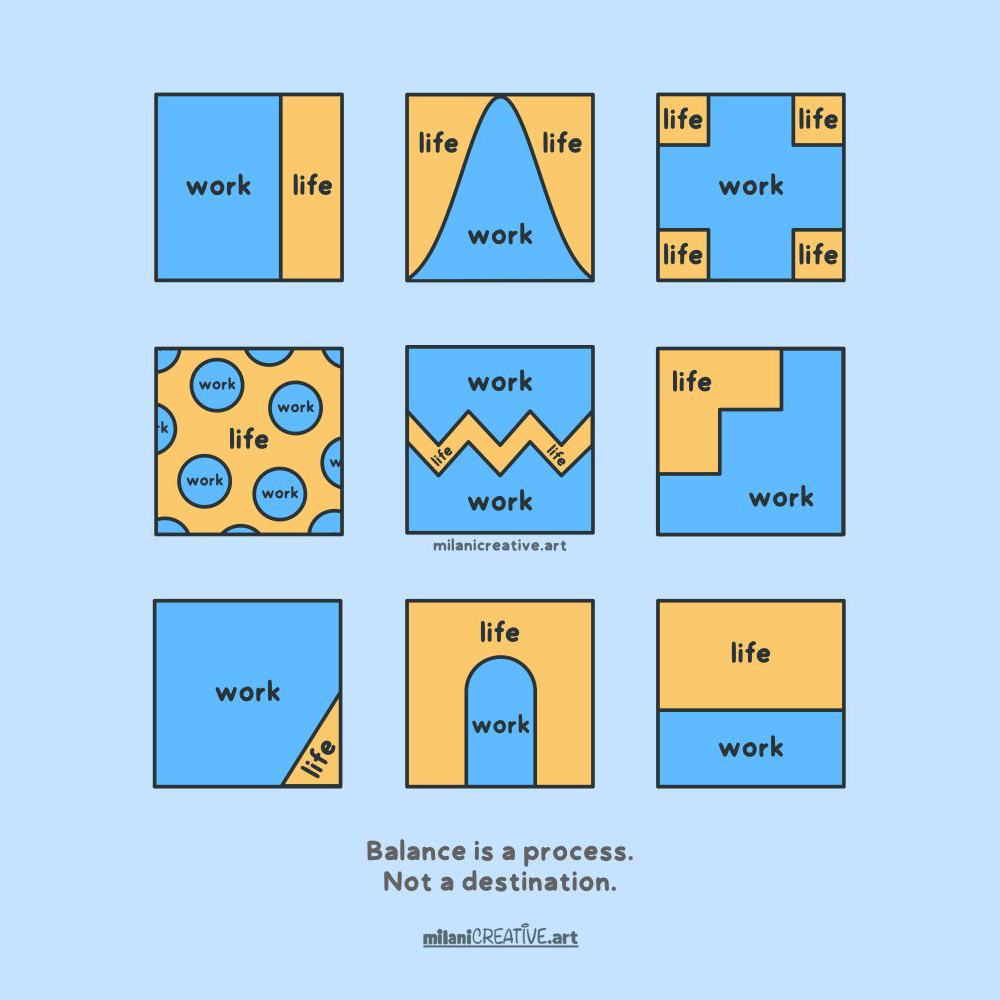
:: Image of the Week
:: CSN’s Book of the Week
The Pathless Path: Imagining a New Story for Work and Life
For anyone who has followed the default path and still feels like something is off or people on an unconventional path who are still searching for a better way forward.
From a small-town Connecticut kid to the most prestigious consulting firm in the world, Paul had everything he thought he wanted. Yet he decided to walk away and embark on the “real work” of his life: finding the things that matter and daring to create a life to make them happen.
The Pathless Path is about finding yourself in the wrong life, and the real work of figuring out how to live. Through painstaking experiments, living in different countries and the goodwill of people from around the world, Paul Millerd pieces together a set of ideas and principles that guide him from unfulfilled and burned out to the good life and all of the existential crises in between.
This book is a personal journey of awakening and is an ideal companion for people considering leaving their jobs, embarking on a new path, dealing with the uncertainty of an unconventional path, or searching for better models for thinking about work in a fast-changing world.
“It’s a rare book in that it is tangentially about careers and being more focused and productive, but unlike almost every other book I have read about these topics, I finished this one and felt better about myself and my career.”
:: Burnout & Stress
How to Think Clearly When Everything Feels Urgent
Something feels really, really important right now. Maybe you’re waiting for something, or you’re facing a big decision. You’re anxious and frustrated, and you keep telling yourself the same thing:
“Everything is riding on this,” you say. “This is the big moment.”
But I have to tell you: That’s probably not true. And those thoughts are hurting you.
Today, I’ll help you gain patience and clarity — by building what I call a low-stakes mindset. You’ll make better choices with less anxiety, and end up with better results.
https://www.jasonfeifer.com/lower-the-pressure-in-high-stakes-situations/
“The thing you fear most has no power. Your fear of it is what has the power. Facing the truth really will set you free.” –OPRAH
How to be a realistic optimist
It can feel hard to stay hopeful at the moment.
Every week seems to bring another reason to worry: war, climate, political division, financial uncertainty, personal worries. The news cycle is relentless and social media often amplifies whatever feels most alarming or enraging. When good things happen, they struggle to compete with the latest crisis.
These concerns are very real and I’m not suggesting we should ignore them. But there’s another reason the world can feel so bleak: our minds are naturally drawn towards focusing on what’s wrong.
We all have a built-in tendency to pay more attention to the difficult parts of life, rather than the good moments. This instinct, known as the negativity bias, was crucial to our ancestors’ survival. Paying attention to unpredictable dangers from predators or rival groups often meant the difference between life and death. If they hadn’t focused on the risks, we wouldn’t be here now.
:: LinkedIn Learning
When to Use AI (and When Not To): Practical Judgment at Work
As AI moves from experimentation into everyday work, the hard part is no longer how to prompt a tool. It’s knowing when to use AI at all, when to question it, and when to rely on your own expertise instead. In this course, instructor Pinar Demirdag teaches you how to make those calls with confidence. Discover a practical discernment test for deciding whether a task belongs to AI or to you, and recognize the situations where AI adds real value versus the ones where it degrades quality or introduces risk. Along the way, work through high-leverage ways to put AI to use, the moments when human judgment should stay in charge, and how to build guardrails around task selection, data sensitivity, and output verification. By the end of this course, you’ll be prepared to use AI responsibly and intentionally, keeping your professional judgment at the center of every decision.
:: Change Management
Ten steps on the road to efficient
Frederick Taylor taught Henry Ford how to do mass production. Deming brought quality, systems understanding, and respect for the worker. And operations research brought insight.
If you have a repeated production process, the method for improving it is almost always the same, regardless of what you and your team produce:
https://seths.blog/2026/08/ten-steps-on-the-road-to-efficient/
“When you fall in love with the process rather than the outcome, you don’t have to wait to be happy.” – Shane Parrish
:: Self-Leadership Development
Showing Up as a Leader
For over 15 years, Mark C. Crowley has been challenging the way we think about leadership. And while Mark was out making that case, I was on a parallel path, writing books, conducting research, and developing and piloting programs around a question that became increasingly urgent:
How do we lead human beings when life changes, and things no longer feel stable?
Because that is where we are now. People are overwhelmed, disconnected, and navigating massive change and disruption in their lives and work.
And when people are exhausted and under sustained stress, the way they think, communicate, make decisions, and perform changes too.
That means we cannot lead people the same way we always have during more stable times. Join Jen Marr and Mark in this great conversation on how caring leadership looks and works in today’s world.
https://www.linkedin.com/events/7510415371112333312
“Time is what we want most but what we use worst.” – William Penn
How portable is your power?
When we talk about different kinds of power, we often think of the bases of power French and Raven described: legitimate power, expertise, reward, coercion, and so on. Or we distinguish between formal and informal power, or between “power over” and “power with.”
When it comes to power in everyday life, there is another distinction I find particularly important:
Where is your power sourced—and how portable is it?
I divide power into two broad categories: externally sourced social power and internally sourced personal power. Read on for details on both!
https://diamondleadership.com/newsletter/how-portable-is-your-power/
7 Core Beliefs of Great Bosses
Great bosses change us for the better. They see more in us than we see in ourselves, and they help us learn to see it too. They dream big and show us all the great things we can accomplish.
Great leadership can be a difficult thing to pin down and understand. You know a great leader when you’re working for one, but even they can have a hard time explaining the specifics of what they do that makes their leadership so effective. Great leadership is dynamic; it melds a variety of unique skills into an integrated whole.
See this article from Travis Bradberry on seven core beliefs of great leaders.
https://www.linkedin.com/pulse/7-core-beliefs-great-bosses-travis-bradberry-8ruaf
:: Work Culture & Team Development
What’s One Question You Can Ask to Build Capacity?
This mini episode of Getting Unstuck was inspired by a July 2021 interview with Dr. Melissa “Missie” Patschke. Missie has since retired, but at the time of our conversation, she was principal of Upper Providence Elementary School in the Spring-Ford Area School District in Southeastern Pennsylvania. Her message, born of 20+ years of experience and reinforced by the COVID pandemic, was that organizations move forward with strength if they’re led by leaders, not a leader.
The necessity of building others’ capacity to lead is not a new idea. It’s not universally practiced, though, because leaders typically get stuck trying to build capacity in one of three ways. Hear them and more in this recording: https://www.queticocoaching.com/blog/417-whats-one-question-you-can-ask-to-build-capacity
“Short-term results come from intensity. Long-term results come from consistency.” John Maxwell
One-on-Ones Aren’t for You
Don’t ruin one-on-ones by making them about you. One-on-ones strengthen other people. See what Dan Rockwell suggests you do for your next 1:1 meeting with a team member.
https://leadershipfreak.blog/2026/09/04/one-on-ones-arent-for-you/
:: Communication
When Compassion Has to Make the Hard Call
Compassion sounds easy when everyone agrees. It becomes much more interesting when the decision is difficult, the stakes are high, and someone is going to walk away disappointed.
On September 17, Toni McLelland MSc FRSA returned to Inspiring Conversations. Toni describes herself as the “Queen of Compassion,” but her experience has been built in places where compassion has had to survive contact with reality. Criminal justice, safeguarding, organizational turnarounds, regulatory pressure, and major public incidents.
This time, she explored the harder side of compassion. Can you genuinely care about people and still decide they will hate?
When does kindness become avoidance? When does compassion require confrontation? And if people truly matter, does that sometimes mean giving them honesty rather than the answer they want?
Toni has spent four decades working at the intersection of people, purpose, performance, and difficult decisions. I am curious about what those years have taught her about the difference between being nice and actually caring.
Because perhaps compassionate business is not about making every decision feel good.
Perhaps it is about how we treat people when it cannot.
Catch her conversation with Hedinn here: https://www.linkedin.com/events/7504517054956433408/
:: Developing Better Habits
Luck is Something You Build – Mel Robbins and Dr. Tina Seelig
Have you ever caught yourself feeling annoyed that other people seem to have all the luck?
You know the ones. They meet a random person on the train and it turns into a new job. They get their seats upgraded on that 10-hour flight while you’re fighting for your square inches of arm rest. They find the best parking spot without circling the lot, and they land in the fastest line at the grocery store while you’re stuck watching your ice cream melt.
It feels like you’re doing everything right…. You’re working hard. You’re trying your best. But no matter what you do, nothing seems to break your way.
What if I told you you’re not unlucky. What if you’ve just never been taught how luck works? Mel Robbins and Dr. Tina Seelig talk through creating your own luck through habits and positioning yourself.
https://www.youtube.com/watch?v=EvEsWpiT8WQ
Habits are powerful, but delicate. They can emerge outside our consciousness or can be deliberately designed. They often occur without our permission but can be reshaped by fiddling with their parts. They shape our lives far more than we realize—they are so strong, in fact, that they cause our brains to cling to them at the exclusion of all else, including common sense. – Charles Duhigg
:: Upcoming Events
Leading to Flourish: The Neuroscience of Servant Leadership
“If you could instantly rewrite one default narrative your brain runs on when you’re under stress, what would you replace it with?”
Born to Flourish: How New Science and Ancient Wisdom Reveal a Simple Path to Thriving, co-authored by Dr. Richard “Richie” J. Davidson (founder of UW–Madison’s Center for Healthy Minds) and Dr. Cortland Dahl, presents a framework that bridges cutting-edge neuroscience with contemplative wisdom.
Dave Bray and Rich Gassen will guide us through some discussion on the four pillars of well-being: awareness, connection, insight, and purpose. The neuroscience and contemplative practices in Born to Flourish provide the internal, psychological engine for the ten characteristics of servant leadership. While servant leadership defines how a leader should behave, Born to Flourish provides the science-backed mental training that allows a leader to consistently embody those behaviors without burnout.
Pre-work:
- Listen to the 10% Happier podcast episode with Dan Harris, Richie Davidson, and Cortland Dahl: Listen Here: The Neuroscience of Flourishing. This interview gives a full overview of all four pillars, the brain science behind them, and how simple micro-practices can shift our daily leadership approach.
- Read brief sections of the book (43 pages), available at the link below.
Full agenda, pre-work, and discussion questions:
https://drive.google.com/drive/folders/1UFmfun0wCfX1Ui60jgAL7dPTeg_8ipte?usp=sharing
Meeting:
October 16, 2026
8:30-10:00 am CST
Meeting Link
Coaching Community of Practice (CCoP) October Meeting
People in diverse roles across campus utilize many different forms of coaching. The Coaching Community of Practice (CCoP) is a virtual space for leaders and learners, coaches and non-coaches from across campus. We offer resources, tools, and frameworks focused on coaching skills, engage in facilitated discussions, and utilize breakout rooms for peer conversations and coaching practice. As we build our capacity as leaders and coaches, we’re also strengthening the coaching culture across campus.
Use this link to join our next CCoP on October 22nd from 12 – 1:00 pm CT: go.wisc.edu/u5qd32
Introducing SEAT: UW–Madison’s Change Management Framework
Change is a constant at UW–Madison, and supervisors often play an important role in helping employees understand and navigate what is changing. Whether the change involves a new process, technology, policy, organizational structure, or way of working, how people experience and respond to change can have a significant impact on successful adoption.
Developed collaboratively with campus partners, SEAT (Stage, Engage, Act, Thrive) is UW–Madison’s practical Change Management Framework and Toolkit. In this session, participants will take a closer look at the framework, explore the tools and resources included in the toolkit, and consider how SEAT can help them think through and support the people side of change.
In this interactive session, participants will:
- Explore the four stages of the SEAT Framework and how they can be applied to different types of change.
- Discover practical tools and resources in the Change Management Toolkit that can help leaders and teams navigate the people side of change.
- Consider how SEAT can help them prepare, engage, and support employees through changes affecting their teams.
Presented by Jen Erickson of the Office of Strategic Consulting.
Jen’s Bio
Jenny Erickson has more than 20 years of experience in community, organizational, and leadership development. As Capacity Building Lead in UW–Madison’s Office of Strategic Consulting, she develops learning experiences and practical tools that help campus teams lead change, strengthen performance, and build healthy workplace cultures. Previously, Jenny served as a professor and community development educator with UW–Madison Division of Extension, partnering with organizations to identify needs, develop solutions, and evaluate impact.
Date: November 19, 2026
Time: 10:00-11:00 am
Online via Zoom Link