Planners’ Picks — November 24, 2026

It’s a short week, as many of our teams take Friday to enjoy a long weekend of family, feasting, and hunting. If you’re hunting for ways to lead successful change, sharpen your communication, or bring more warmth and human connection to your work, you’re in luck—it’s all inside this Thanksgiving edition of PP.
:: Image of the Week
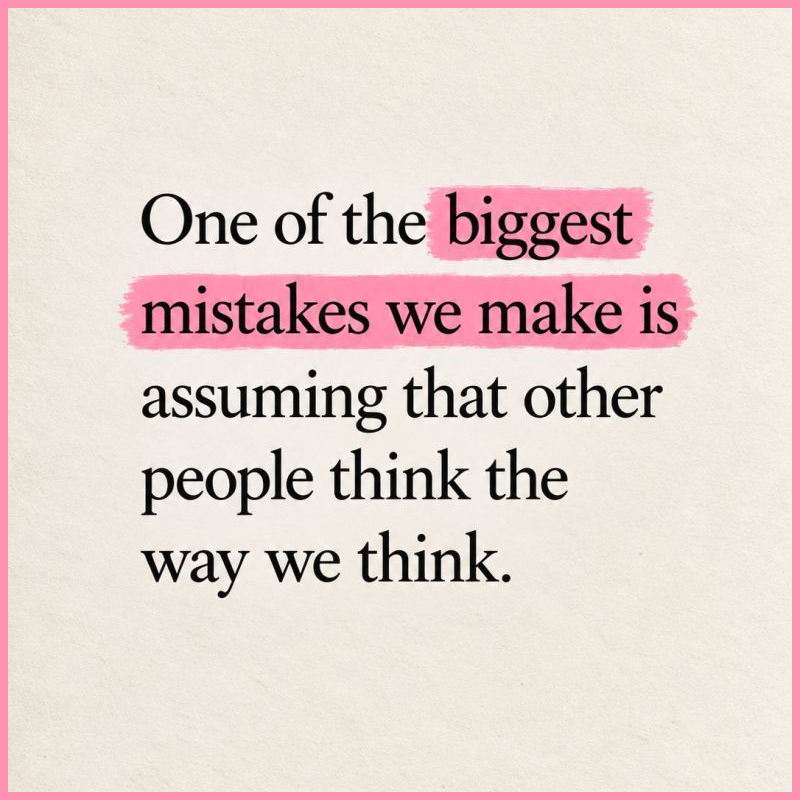
This might be good advice to consider as you sit around the dinner table on Thursday!
:: Change Management
A Shared Approach to Change
The University of Wisconsin–Madison is a large, complex organization that is continuously evolving. New processes, policies, and priorities affect campus life every day. How we navigate those changes matters.
Successful change takes more than a good plan. It requires attention to how people experience and respond to change. Supporting and strengthening our foundation, including our people, culture, and operations, is essential to delivering on our mission for generations to come. To support that work, campus leadership partnered with change practitioners from across campus to develop S.E.A.T., a change management framework for the university community.
S.E.A.T. stands for Stage, Engage, Act, and Thrive. It’s a practical, people-centered approach to leading change at UW–Madison. It helps you define what is changing, engage those affected, support adoption, and sustain change over time. It also reflects UW–Madison’s commitment to fostering a workplace where excellence and employee well-being go hand in hand, recognizing that successful change depends on people having the support they need to succeed.
https://strategicconsulting.wisc.edu/changeatuw/
Find the recording and other resources from CSN’s recent presentation on this framework here:
https://campussupervisorsnetwork.wisc.edu/past-events/#seat
If you are going to achieve excellence in big things, you develop the habit in little matters. Excellence is not an exception; it is a prevailing attitude. – Colin Powell
:: Collaboration
It’s Hard to Collaborate When You’ve Already Decided You’re Right
Sometimes the very skills that make us great at our jobs can get in the way of collaboration. Many leaders excel at solving problems and making decisions. They’re quick to spot a solution and get things moving. But once they’ve found an answer they like, it can be surprisingly hard to let go.
See this story from facilitator Marcy Fortnow on the challenges we face in collaboration.
https://engagingplay.com/its-hard-to-collaborate-when-youve-already-decided-youre-right/
:: CSN’s Book of the Week
Improv Wisdom: Don’t Prepare, Just Show Up
In an irresistible invitation to lighten up, look around, and live an unscripted life, a master of the art of improvisation explains how to adopt the attitudes and techniques used by generations of musicians and actors.
Let’s face it: Life is something we all make up as we go along. No matter how carefully we formulate a “script,” it is bound to change when we interact with people with scripts of their own. Improv Wisdom shows how to apply the maxims of improvisational theater to real-life challenges—whether it’s dealing with a demanding boss, a tired child, or one of life’s never-ending surprises. Patricia Madson distills thirty years of experience into thirteen simple strategies, including “Say Yes,” “Start Anywhere,” “Face the Facts,” and “Make Mistakes, Please,” helping readers to loosen up, think on their feet, and take on everything life has to offer with skill, chutzpah, and a sense of humor.
See our upcoming events for your chance to play in an improv space!
:: Communication
The High Value of Value-Based Language
Your expertise runs deep. Level-setting your message is a critical skills gap for most leaders who are being promoted upstream “out of ‘lab’ and into ‘lead.'”
The rooms you present to are wide: boards, executive committees, investors, partners from other functions. Smart people with different specialties, all trying to decide what your data means for them.
A 5-word value-based sentence tells them how to think about what you just said. It tells them THE VALUE of that information. It’s often the line they remember after the meeting.
Here’s a story and advice from Cindy Skalicky on value-based language.
https://www.linkedin.com/pulse/high-value-value-based-language-cindy-skalicky–td9yc
“How wonderful that we have met with a paradox. Now we have some hope of making progress.” – Niels Bohr
The Art of Fighting: Building Better, Stronger Relationships with Priya Parker Video Replay
If you missed Priya’s recent conversation with the Wisconsin Public Libraries on her new book, The Art of Fighting, you might want to catch the replay below.
Priya talks about using low-stakes “fights” to build skills in the area of conflict and negotiation in groups at work and at home.
:: LinkedIn Learning
When to Use AI (and When Not To): Practical Judgment at Work
As AI moves from experimentation into everyday work, the hard part is no longer how to prompt a tool. It’s knowing when to use AI at all, when to question it, and when to rely on your own expertise instead. In this course, instructor Pinar Demirdag teaches you how to make those calls with confidence. Discover a practical discernment test for deciding whether a task belongs to AI or to you, and recognize the situations where AI adds real value versus the ones where it degrades quality or introduces risk. Along the way, work through high-leverage ways to put AI to use, the moments when human judgment should stay in charge, and how to build guardrails around task selection, data sensitivity, and output verification. By the end of this course, you’ll be prepared to use AI responsibly and intentionally, keeping your professional judgment at the center of every decision.
:: Diversity and Inclusion
Can Love Make Your Business More Successful?
What if the secret to building a successful business isn’t working harder, but leading with love? In this episode, Dr. Tamsin sits down with Dennis Pitocco, founder and Chief Reimaginator of 360° Nation, for a heartfelt conversation about conscious leadership, compassion in the workplace, employee engagement, burnout, authentic relationships, and why stepping away from busyness can help us reconnect with what truly matters. You’ll get a peek at what most people miss:
- Why expressing love openly can strengthen friendships and everyday human connection
- How making employees feel heard and valued can improve retention and reduce hiring costs
- Why genuine compassion matters more than simply appearing kind or supportive
- Why setting boundaries with one-sided relationships creates more room for meaningful connections
- How offering reassurance and emotional support can be just as valuable as solving business problems
If you’re interested in conscious leadership, workplace culture, emotional intelligence, burnout prevention, work-life integration, personal growth, or building a purpose-driven business, this episode offers a refreshing reminder that success isn’t just about what we achieve. It’s also about how we treat people, connect with ourselves, and make a positive difference in the world.
https://www.youtube.com/watch?v=ikNS-VRnQt4
“Attention is the rarest and purest form of generosity.” – Simone Weil
:: Work Culture & Team Development
Equally laud the skills of younger and older workers
This question was brought up by Karen Catlin, author and producer of the weekly newsletter Better Allies:
Should educators encourage or discourage students to use AI?
Someone asked this question recently during a talk by Paula Goldman about her new book Manage the Machine: How to Harness Human-AI Collaboration at Work. Goldman made a compelling point: Future employers will be looking for people skilled at working with AI, so educators need to prepare students for that demand.
On my drive home, though, I started thinking about a potential downside. Could celebrating the skills of AI natives inadvertently reinforce ageism at work?
I revisited a 2022 Harvard Business Review article, I Was a Manager in an Ageist Workplace, in which Nicole D. Smith described ageist behaviors that had become normalized in her organization. Older workers resisted collaborating with younger colleagues, while younger employees disparaged older colleagues’ skills and willingness to learn. These assumptions hurt everyone. As Smith explained, ageism can limit contributions, devalue employees, and undermine job satisfaction and engagement.
One recommendation she offered for disrupting ageism: Equally laud the skills of digital natives and the knowledge of older workers. For 2026, I’d update that advice to include AI skills. Recognize colleagues who are adept at using AI, regardless of their age. And recognize the experience, judgment, and institutional knowledge that colleagues of all ages bring to their work.
Consider who you endorse publicly. Review the recommendations you make for promotions and awards. Think about the kudos you give casually. If you haven’t been valuing and praising the skills of both younger and older colleagues, you’ve got some work to do.
https://mailchi.mp/af92454ccc58/5-ally-actions-oct-23-2026?e=6ad6c46384
“Thanks for noticing me.” ~ Eeyore
How to Respond When Employees Ignore Minor Rules at Work
Here’s a story from Karin Hurt on employee behavior regarding rules.
When employees ignore seemingly minor rules at work, start by determining whether the requirement still serves a meaningful purpose. If it does, explain its impact, clarify the expectation, and address repeated violations through a respectful accountability conversation. If the rule no longer supports safety, customers, coworkers, or business results, work to change or remove it. This human-centered approach creates a more fair, trusting, and consistent culture.
Maybe they arrive a few minutes late, skip a required CRM update, disregard a meeting norm, stretch the dress code, or submit administrative paperwork however and whenever they choose.
Each incident seems small. Addressing every single instance can feel petty. But ignoring them often creates frustration for coworkers, uncertainty about what you actually expect, and can undermine your team’s trust and performance.
Here’s a practical, human-centered approach that starts with curiosity.
Tiger Team, Assemble!
Organizations seeking transformational change can deploy tiger teams—temporary cross-functional groups tasked with specific issues—to solve problems, drive change, and develop future leaders. Their work should be highly focused, and the teams nimble. Their recommendations should be acted upon, and the elements that work scaled quickly. These teams can be a great outlet for top emerging talent to show leadership their capabilities and readiness for future leadership roles.
See Sanjay Khosla‘s insights on this topic below!
https://insight.kellogg.northwestern.edu/article/tiger-team-assemble#
:: Networking
It’s Time to Update Your LinkedIn Profile
Sarah Johnston of Briefcase Coach recently surveyed readers on the last time they updated their About section on their LinkedIn profile. More than 50% of respondents said that it’s been two years OR MORE! Your About section is your digital first impression— it’s your opportunity to show the world who you are, what you do uniquely well, and why you make the decisions that you do.
Use her free LinkedIn Guide to update your profile or let my team do it for you! Whether you’re searching for your next role or just want people to know how they might be able to collaborate with you better, this valuable resource will guide you on how to improve your feed.
https://www.briefcasecoach.com/linkedin-best-practices/
:: Take Five
*Note: CSN occasionally adds “Take Five” articles to take you off the beaten path. Articles are about local or regional areas of interest, but not necessarily focused on leadership development. The intent is for you to take a break from being a leader and relax for a moment!
Five Things You Didn’t Know About the Lakeshore Nature Preserve
“We’re so lucky to have these lands as a public resource,” Bryn Scriver said. “If they hadn’t been acquired by the university, [they] wouldn’t be available for us all to enjoy.” – speaking about how parts of our preserve were almost sold off as residential plots
The preserve may be familiar to generations of Badgers, but its 300 acres hold surprises around every trail. Anica Graney gives us five interesting facts about this treasured Madison recreation area.
https://nelson.wisc.edu/the-commons/5-things-you-didnt-know-about-the-lakeshore-nature-preserve/
:: Upcoming Events
CSN Presents Leadership Improv
CSN is excited to host another Leadership Improv session—an interactive, practical workshop designed to help you practice responding to curveballs and unexpected situations in real time. Using foundational techniques from improv theater, we’ll explore how quick thinking, adaptability, and active listening directly translate to everyday leadership readiness. No “performing” required! Come build your leadership muscles in a supportive, welcoming, and fun environment.
Date: December 14, 2026
Time: 12:00-1:15 pm
Location: 21 N. Park Street, Room 1108 (first-floor conference rooms on the east end of the building)
Register here: https://go.wisc.edu/34l72g