Planners’ Picks — December 9, 2025

We’re traveling into the future this week with a CSN event and seeing what’s missing, too. Let’s reinvent and boost productivity as well!! We hope you enjoy this installment of our newsletter.
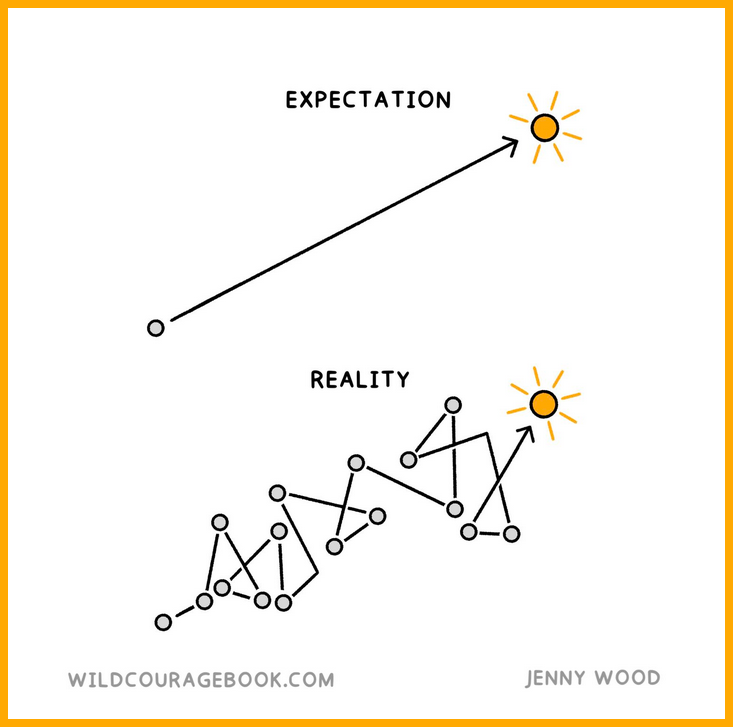
:: Image of the Week
:: CSN’s Book of the Week Recommendation
The Human Element
How do you get people to say yes to a new idea or innovation? The deep assumption of most marketers, innovators, executives, activists, or anyone else in the business of creating change, is that the way to sell an idea is to focus on heightening its appeal. We instinctively believe that if we add enough value, people will say “yes”. This reflex tends to lead us down a path of adding features to an idea and amplifying its benefits in order to get others on board. These activities and strategies designed to generate demand is a set of tactics we refer to in the book collectively as “Fuel”. But by focusing on Fuel to enhance attraction, innovators often neglect the other half of the equation – the Frictions that work against the desired behavior we seek in others. Frictions are the psychological forces that oppose and undermine change. Though rarely considered, identifying, understanding and overcoming these Frictions is often the key to successfully achieving our innovation goals. In this book, readers will discover the four Frictions that operate against new ideas and innovation: Inertia, Effort, Emotion, and Reactance. By examining these Frictions, readers will come to understand the unexpected reasons why the ideas and initiatives they are most passionate about get rejected. Readers also will learn how to identify and disarm these forces of resistance and will discover how the very Frictions that hold us back can be transformed into important catalysts for change. Authors Loran Nordgren and David Schonthal also have other resources and tools on their website to support the reading. https://www.humanelementbook.com/ :: CuriosityHow to Find What’s Missing, with Jeff Wetzler
Jeff Wetzler is co-founder of Transcend, a nationally recognized innovation organization, and an expert in learning and human potential. His experience spans 25+ years in business and education, as a management consultant to top corporations, a learning facilitator for leaders, and as Chief Learning Officer at Teach For America. He’s the author of Ask: Tap Into the Hidden Wisdom of People Around You for Unexpected Breakthroughs in Leadership and Life*. We place our organizations at risk when we miss stuff. Often, the things we miss aren’t what we don’t know. Instead, they are the assumptions we don’t even question. In this conversation, Jeff and Dave explore the practices that work to find what’s missing in this Coaching for Leaders episode. Hidden feedback cues:- Repeated questions or suggestions about seemingly small details.
- Increased involvement in tactical decisions.
- Unexpected decreases in engagement.
- When We’re Curious About People, They Like Us More
- Curiosity begets curiosity.
- Curiosity creates empathy.
- Curiosity makes us more resilient.
- What might I be missing?
- How else might someone interpret the situation?
- How might I be impacting them?
- What can I learn from this person?
“It’s as true today as it ever was: He who seeks beauty will find it.” – Bill Cunningham:: Developing Better Habits
What are the Habits of Successful Project Managers
Karin Hurt of Let’s Grow Leaders did a quick survey with project managers. The habits they chose were from all 4 dimension of collaboration.-
Connection: Are we connected as human beings?
-
Clarity: Do we have a shared understanding of success?
-
Curiosity: Are we genuinely interested in one another’s perspectives and what’s possible?
-
Commitment: Do we have a shared agreement?
“The day soldiers stop bringing you their problems is the day you have stopped leading them. They have either lost confidence that you can help them or concluded that you do not care. Either case is a failure of leadership.” – GENERAL COLIN POWELL:: Self-Leadership Development
Staying Human in an Age of AI – Upgrading One’s Mental Operating System
In “Upgrade Your Mental Operating System” Rishad Tobaccowala shares everything he has learned over decades of practice and observation on how each of us and our companies can remain relevant. The 3-step process to upgrading one’s mental operating system is: Spend an hour a day learning : If we do not invest time for learning we will become irrelevant. No if’s or but’s about it. The future belongs to leaders who are always learning vs those who are believe they are all knowing. Build a case for the opposite of what we believe is true: New technologies are challenging some assumptions of the past such as scale is a benefit. In an AI age scale may matter less in an increasing number of categories. Another reason to build a case for the opposite case is to compensate for our tendency to surround ourselves with people who agree with us or to look for confirming data. To exercise our minds and identify our vulnerabilities we should attack our own thinking once in a while. Focus time on making versus managing : We need to build, sell, create, mentor and guide a majority of the time we are at work versus checking in, monitoring, measuring and attending meetings. Increasingly, building knowledge bases, processing and data collection, manipulating of charts, summarizing and laying out options, are all going to be done by machines. The key is to build our HI where HI is not just Human Intelligence but also Human Insight, Human Interaction, Human Inventiveness, Human Imagination, Human Intuition and Human Inspiration. This is from the book “Staying Human in an Age of AI” by Rishad Tobaccowala. His full chapter on upgrading can be downloaded here.Every leader needs to think of themselves as a reinventor
Julie Sweet doesn’t just talk about reinvention—she lives it. As CEO, she has led Accenture through its biggest changes and continues to reshape how the company works and leads in the age of AI. “Every leader needs to think of themselves as a reinventor,” she says. “Reinvention only can happen with leaders, and leaders have to make a choice: Am I a reinventor?” Read or listen to this short article from Sweet on three things you should focus on as a leader in today’s landscape. https://fortune.com/2025/11/13/accenture-ceo-julie-sweet-leadership-reinventor-skill-ai/ :: Work Culture & Team DevelopmentConflict is Good – Five Ways to Make it Even Better!
From the moment we wake up, we can be – and often are – in conflict with others. With our family members over how the day will go, with team members about the best next step on a project, with our manager over how to implement a new process, with colleagues about budget issues, with the person on line in front of you who is taking too long to order…the list goes on. Conflict is unavoidable and generally unenjoyable. And if mishandled, it can negatively impact the results we’re trying to achieve and ruin our day…or our week. But conflict is not a bad thing, even though it feels so bad. In fact, it’s necessary and important. It brings out ideas that might not get thought of and strengthens proposals before they’re proposed – but only when it’s handled in ways that heighten the positives and lessen the negatives. So how do we work through conflict in a way that works? https://chatsworthconsulting.com/2025/11/20/conflict-is-good-five-ways-to-make-it-even-better-5/“I understand what you’re saying, and here’s another truth.” – Trevor McCray, PhD
5 Learning Interaction Types to Help Your Employees
An article from Dr. Gina Anderson on how to transform your employee professional development plans with different learning models. Think about how much information your employees remember from that last conference they attended. You may have an employee who has a preference to learn in person and another who benefits from listening to the information in small parts at night on their couch. The reality is that educators have long known that traditional ways of content delivery do not always align with adult learning preferences. However, we continue to educate employees all in the same way with the same delivery cadence. Read on: https://www.learningwithgina.com/5-learning-interaction-types/ :: Mental Health and Self-CareGratefully Navigating the Holidays
Holidays symbolize significance. They are markers for human history, our shared values and beliefs, and a time of remembrance. Holidays can elicit awe, joy, connection, hope, and memories. However, their nourishment can also be a source of pain. The practice of living gratefully can help guide you through this season. Here are some reminders for navigating the holidays with a grateful orientation. https://grateful.org/resource/gratefully-navigating-holidays/ :: Sustainability in the WorkplaceMaking Sustainability Part of Everybody’s Job
Companies are moving fast to tackle climate change—investing in new technologies, reducing their environmental impact, and rethinking how they do business. But here’s the catch: full-time sustainability roles usually make up less than 1% of the workforce. That’s not enough to meet the moment. To drive real change, you need to engage the other 99%. In this course, instructor Drew Wilkinson shows you how to activate your entire workforce by building a culture of sustainability from the ground up. Learn how to educate, inspire, and empower employees across every department to take meaningful action—no matter their role. Forward-thinking companies know: creating a sustainable future requires everyone. Whether you’re in HR, operations, sustainability, or leadership, this course will give you the tools to make sustainability a shared responsibility—and a competitive advantage. Learning objectives- Explain why employee engagement is key to scaling sustainability.
- Recognize how to educate, inspire, and activate the entire workforce in sustainability efforts.
- Learn practical strategies to make sustainability part of everyday work.
- Find ways to turn awareness into action across your organization.
15 Clever Techniques to Boost Focus and Productivity at Work
With the constant barrage of emails, meetings and distractions, finding real focus and productivity in your workday can be challenging. Many professionals struggle to maintain momentum long enough to finish a project. However, the right techniques can help boost concentration and productivity on even the busiest of workdays. Here, 15 Rolling Stone Culture Council members share their favorite techniques for staying on track and explain why these strategies work so well in a busy work environment. From using time-blocking methods to taking strategic breaks, these tactics can help boost focus and efficiency, even when you’re in a productivity slump. https://www.rollingstone.com/culture-council/panels/boost-focus-productivity-work-1235106114/ :: Upcoming EventsGoal Setting in Reverse—Future Self Exercise
Look Back from Success: Map Your Milestones. Join Rich Gassen from CSN to explore your future self! We’ll connect on Zoom and magically travel 3-5 years into the future. We’ll then go through three small group exercises, discussing the audacious thing you’ve achieved in the past few years and the steps or path that got you there. The three prompts: 1. Share your original goal(s) and how you feel now that you’ve accomplished them. 2. What was the hardest thing you overcame to meet your goal(s), and how did you do it? 3. What are your happiest clients or peers saying about the work you’ve done for them or the positive change you’re making since achieving the goal(s)? Come prepared to have a future self in mind to role-play and engage with the group! Note: this can be a completely fictitious scenario, or it can be a real goal of yours that you haven’t actually accomplished yet; your choice! Examples to consider: A promotion or new role / becoming an entrepreneur / buying a vacation home / starting a side hustle / retiring comfortably / _______________? Date: December 18, 2025 Time: 11:00-11:55 am Location: Zoom Link Register Here: https://go.wisc.edu/vj5wz4CSN’s Bite-Size Book Club—Let’s Talk: Make Effective Feedback Your Superpower
“Communications are much clearer if you recognize that there are three kinds of feedback: appreciation, coaching, and evaluation.” ― Therese Huston CSN is facilitating the next Bite-Size Book Club in January! “Let’s Talk: Make Effective Feedback Your Superpower” by Therese Huston offers an insightful exploration into mastering the art of feedback, an essential tool in any leader or manager’s toolkit. Drawing from extensive research and real-world examples, Huston unravels the nuances of feedback, emphasizing its pivotal role in enhancing team dynamics and fostering a culture of growth. The book delves into differentiating between appreciation, coaching, and evaluation, providing a comprehensive understanding that elevates feedback beyond mere compliments or criticisms. Designed for those seeking to transform their feedback skills into a powerful asset, this guide illuminates how feedback can serve as a bridge to deeper professional connections and personal development. Huston highlights the importance of holding the person over the problem, thereby fostering a supportive environment where individuals feel valued and motivated. Readers will find practical advice on handling feedback conversations with empathy and care, coupled with strategies that minimize defensiveness and build trust. CSN’s Bite-Size Book Club will explore Huston’s ideas on feedback as a large group and later we’ll look at examples she provides in more detail—you’ll be able to join a small-group breakout session on the topic of appreciation, coaching, or evaluation styles of feedback during our time together. Regular feedback, when delivered skillfully, can turn average performers into the hardest workers and stars into superstars. First, find out what kind of feedback an employee wants most: appreciation, coaching, or evaluation. If they crave one, they’ll be more receptive once their need has been satisfied. Then Huston lays out counterintuitive strategies for delivering each type of feedback successfully, including:- Start by saying your good intentions out loud: it may feel unnecessary, but it makes all the difference.
- Side with the person, not the problem: a bad habit or behavior is probably less entrenched than you think.
-
Give reports a chance to correct inaccurate feedback: they want an opportunity to talk more than they want you to be a good talker.
How to Bring Your Best Self to Work
LifeMatters and the Employee Assistance Office are offering a virtual webinar. This presentation emphasizes strategies to enhance job performance, improve relationships, and contribute positively to the workplace. Participants will learn about:- Self-awareness
- Positive mindset
- Work-life balance
- Continuous learning
- Building relationships
- Health and wellness