Planners’ Picks — December 16, 2025
 On the cusp of the holidays and exams ending for students, we focus on curiosity, gratitude, and tiny changes for good. The Planners of CSN are grateful for ALL OF YOU, who make this community special!
:: Image of the Week
On the cusp of the holidays and exams ending for students, we focus on curiosity, gratitude, and tiny changes for good. The Planners of CSN are grateful for ALL OF YOU, who make this community special!
:: Image of the Week
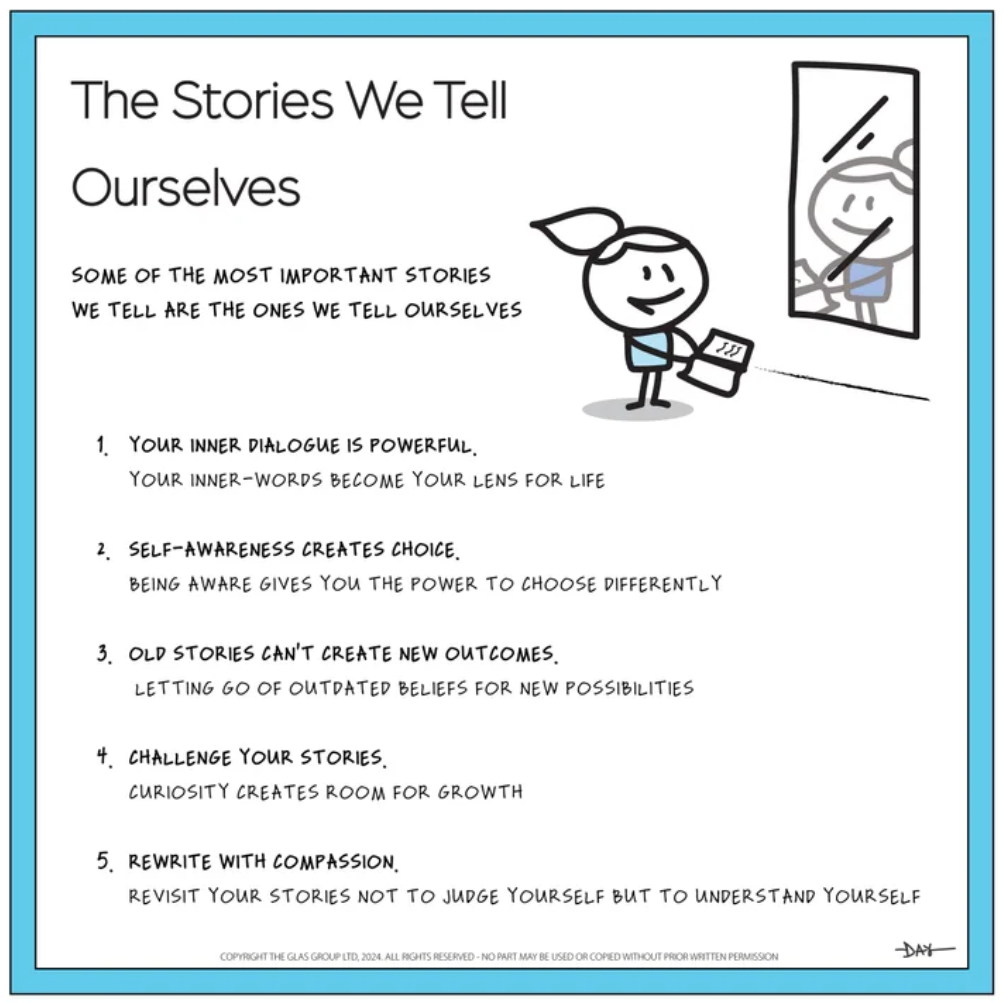 :: Curiosity
Most Leaders Aim to Be More Curious
On this recent episode of Coaching for Leaders, Shannon Minifie tells us that most leaders aim to be more curious. They know being coach-like is an effective way to lead — and they also know it’s good for the bottom line. “Where a lot of us end up stumbling is in the ‘how’ we work to be curious. We assume that if we simply end more sentences with question marks, we’re being more curious. Sometimes, we get too caught up in our own intellectual curiosity and entirely miss the other side.” On this episode, Shannon highlighted recent findings from their partnership with The Harris Poll, why leaders often miss relational curiosity, and how we can do better. Shannon is CEO of Box of Crayons, the company behind The Coaching Habit by Michael Bungay Stanier. Here’s what she told us:-
5-6 hours of the average workweek is lost to the fear of making mistakes.
-
A strong majority of leaders say employees are expressing a desire for more feedback, and a majority also say that people are unable to receive hard feedback.
-
Relationships are the core of these conflicting messages. Without a relationship of trust, helpful feedback often doesn’t land that way.
-
Intellectual curiosity helps us learn what we don’t know. Relationship curiosity helps the other person learn what they don’t know.
-
Ask yourself: what is my goal in asking this question?
-
Rather than asking a question that starts with a “why,” consider asking a question that starts with a “what.”
How to Start Better with Peers
We all reinforce people who reinforce us. We hate obvious suck-ups, but not the good ones. The good suck-ups can easily fool the best leaders. That warning came from Marshall Goldsmith who highlighted The Habits That Hold Leaders Back. Most leaders recognize the critical nature of healthy, peer relationships. Yet, few leaders lay an intentional foundation for success as those relationships start. In this episode, Michael Bungay Stanier and Dave Stachowiak discuss how to start with peers using the five questions in a Keystone Conversation. Key Points- Nobody really like to say hello but everyone likes to be greeted. Make a decision to be the person that begins.
- Preparing thoughtful responses to the five questions in a Keystone Conversation will help you come to a dialogue in an authentic and vulnerable way.
- The responses themselves aren’t as critical as the process itself. By entering into a keystone conversation, you are laying the foundation for future dialogue and the best possible relationship.
See Differently, Solve Better: Problem Solving Through Perception with Chris Bassett
What if your biggest leadership roadblock isn’t the problem… but how you see it? Nikki sits down with Chris Bassett—founder of Green Bean Consulting Group—to flip your problem-solving approach on its head. What does abstract art have to do with business challenges? And how does soaking a walnut help teams break through stuck thinking? Chris takes us on a journey through neuroscience, philosophy, and real-world consulting wins to show how our brains often mislead us, and how leaders can use perception as a powerful tool for change. From spotting red flags of overconfidence 🚩 to building high-functioning teams through de-familiarization and pairing structures, this episode is packed with fresh thinking and practical tools. Whether you’re leading a team, solving complex issues, or just tired of running in circles, this conversation is your invitation to slow down, zoom out, and see differently. https://gutplussciencepodcast.libsyn.com/315-see-differently-solve-better-problem-solving-through-perception-with-chris-bassett :: CSN’s Book of the Week RecommendationThe Compass Within
In a time when so many are questioning their direction and feeling like happiness is out of reach, The Compass Within offers the key to a fulfilling life that so many people are missing today: core values. How do you find authenticity in every area of your life: your relationships, your work and your community? In this enlightening workplace parable, Jamie Hynes is a high-achieving manager trying to reconcile his ambitions with the ethically murky situations his new boss keeps putting him in. Jamie and his new fiancé, Beth, are also planning their wedding, facing decisions about how they’ll make a life together in a community where Jamie feels increasingly out of place. Jamie soon meets with Jack Reardon, a forward-thinking CEO who mentors Jamie in a holistic process to discover his core values and decide with confidence what he wants in all areas of life. The process the Jamie goes through is shared in detail so that you can go through the same experience, and get the vital clarity only core values can provide. Note: Robert Glazer was our featured author with the book Elevate in 2021’s CSN book club. https://robertglazer.com/compass :: Self-Leadership DevelopmentStop People-pleasing at Work
Being a people-pleaser at work can hinder your career advancement as you prioritize others’ needs over your own goals, writes Beatriz Victoria Albina, a master certified coach, who explains that people-pleasing stems from a desire to avoid discomfort and manage others’ emotions. Albina suggests building tolerance for discomfort as a way to break the habit, starting with small steps, such as saying, “Let me think about it and get back to you,” to give yourself time to consider whether you can take on more work. https://www.smartbrief.com/original/stop-people-pleasing-at-work-by-learning-to-tolerate-discomfort?lrh=7394a7bdec786acd275dc2839deba8db5ad592974ed6cb3d733a84295e1a53c2How Tiny Changes Forge Great Leaders
If you’re looking to get better at leadership, there’s not a single path and no secret trick to being a great leader. Leadership is a set of skills, and you can’t acquire them all at once. In this audiobook summary, leadership and security expert Andy Ellis shares some key takeaways from his book 1% Leadership: Master the Small Daily Improvements that set Great Leaders Apart. Andy explains how you can develop your leadership skills a little bit every day, the perils of trying to be a great leader all at once, the self-care required for good leadership, and more. https://www.linkedin.com/learning/1-leadership-how-tiny-changes-forge-great-leaders/introducing-andy-ellis-23826262?u=56745513 :: Mental Health and Self-CareBeing Kind Is Good for Your Health
On this episode of The Science of Happiness, we explore how everyday acts of kindness strengthen our sense of connection and belonging, and why our brains are built to feel good when we support others. Drawing from both research and lived experience, we examine how even small gestures can reduce anxiety, increase purpose, and ripple outward through our communities. We also look at why kindness flourishes when it’s spontaneous and genuine, and how practicing it can open us to deeper presence, vulnerability, and joy. https://greatergood.berkeley.edu/podcasts/item/being_kind_is_good_for_your_health :: LinkedIn LearningHow to Get Started on Tasks You’re Avoiding
There may be times in your career when you avoid certain tasks, due to a variety of reasons. This course, taught by Ali Schiller, provides the tools and techniques to overcome task avoidance and get started on daunting tasks. Assess your energy blocks and understand the psychological factors behind procrastination. Create a personal action plan tailored to your specific needs. After this course, you’ll be equipped to overcome procrastination and boost your productivity. Learning objectives- Assess why you are avoiding an energy expense and how to work around it.
- Use prioritization methods to tackle tasks efficiently.
- Develop and sustain motivation for starting and completing tasks.
- Design a customized action plan to address and manage tasks you’ve been avoiding.
Carillon Tower Rendition of Varsity
University Carillonneur Emeritus Lyle Anderson performed a concert in memory of Chancellor Emerita Rebecca Blank at 4:50pm on October 2nd, 2023, at the Carillon Tower outside of the Social Sciences Building. Were you there? Here is a recording of Varsity: https://uwmadison.box.com/s/t5lan98uzf1z325x3pcnd2ccfhcp6nt5 Catch the entire concert (18:54 running time) here: https://www.youtube.com/watch?v=ZIWtwm_Cu_E :: Gratitude and RecognitionGritty Gratitude: The Non-Hallmark Guide to Not Losing Your Sh*t
For days when your “thanks” comes with a side of “seriously, universe?” I have a confession: my gratitude practice has a pretty low bar lately. Some days the most honest thing I can say is, “Today sucked slightly less than yesterday.” Not poetic. Not sexy. But weirdly? It counts. Because while Insta and Facebook are busy with hand-lettered “blessed” signs and “life is good” posts, real life is… well, not that. Every news cycle feels like the season premiere of “What the Actual Hell?” brought to you by a “World on Fire.” Empathy is an endurance sport and self-care requires daily system updates. And yet we’re somehow still expected to “just be grateful,” as if the human nervous system runs on cool vibes, pumpkin spice, and inspirational mugs. >>> If practicing gratitude feels especially hard this year, congratulations. You’re paying attention. The good news is that gratitude doesn’t have to be a performance. It doesn’t need to be pretty, poetic, or aesthetically pleasing. Real gratitude is a cracked-open, slightly sarcastic survival skill you need when life feels messy, unfair, overwhelming, or flat-out mean. Read Dr. Melissa Hughes’ article on gritty gratitude here: https://www.melissahughes.rocks/post/gritty-gratitude?cid=9d357a21-8c12-4875-9aae-89d0deaed78c :: Upcoming EventsDecember Servant Leadership Meeting — Gratitude: Beyond the Slogans: Resilience, Courage, Connection
In a world where it often feels there’s not enough time to think – or get this week’s groceries, pay the gas bill, go for the walk you keep promising yourself, clear out your in-box, or, or, or – the idea of adding one more thing can seem insurmountable. And yet, in the Dec. 19 meeting of the Servant-Leadership group at UW–Madison, we will explore how this one thing – gratitude – holds the promise of easing burdens and opening a space for joy. We will look at gratitude as the ground of resilience, courage, and connection, and the first step can be as small as looking out the window and seeing the deep blue sky. Pre-reading: Several ways to consider gratitude. https://drive.google.com/drive/folders/1QItaLqU3uyU2_bNw2wbqgwOYYCRhwt20 We invite you to join us for “Gratitude: Beyond the Slogans: Resilience, Courage, Connection.” The agenda: 1. Gathering: Bring to mind one or two things you are grateful for. How does that make you feel? How does being grateful for even one small thing reverberate in your life? 2. Resilience (or Why Bother) a. How does gratitude feel for you? Does the “magic” seem true? b. Are there times you can share when being grateful has made a difference in how you connected with life or others? c. The idea of finding meaning instead of searching for purpose turns a lot of what we’ve been taught upside down. How does it make a difference for you? Does it even make sense? 3. Courage: Robin Wall Kimmerer and Joe Primo suggest that gratitude can lead to both courage and a revolutionary spirit. a. It seems gratefulness can be a slippery slope – from just saying thank you to waking up and needing/wanting to participate more fully in life. What kind of courage does it take to not go back into hiding and begin the journey? How does gratitude make that easier in your life? b. Do you (we, as a society) have the energy in these unsettled times to do more than say thank you and try to get by? c. How would you build your revolutionary spirit? 4. Connection a. How do you see gratitude impacting how you relate to those around you? b. Which of Howells’ pillars of gratitude comes most easily to you? Which are the most difficult, and why? 5. For reflection: a. What does gratitude mean to you? How will you more consciously integrate it into your life? Date: December 19, 2025 Time: 8:30-10:00 am CST Location: Zoom link below Meeting Link Meeting ID: 987 0673 4791 Passcode: 156691CSN presents Leadership Improv
Through a variety of fun, engaging activities, Amanda and Jason will demonstrate how improvisational comedy skills can help supervisors work through difficult situations with staff and peers, as well as practice leadership skills in a light-hearted and low-risk environment. No comedy or improv skills necessary; just bring your willingness to be curious and a little silly with your peers. We’ll meet in person for this session. Please register below to participate! Date: January 6, 2026 Time: 2:00-3:15 pm Location: DoIT Offices, 1210 W. Dayton Street, Room 3139 Register! More information on Leadership Improv can be found at https://it.wisc.edu/it-community/committees-groups/uw-madison-it-connects/leadership-improv/CSN’s Bite-Size Book Club—Let’s Talk: Make Effective Feedback Your Superpower
“Communications are much clearer if you recognize that there are three kinds of feedback: appreciation, coaching, and evaluation.” ― Therese Huston CSN is facilitating the next Bite-Size Book Club in January! “Let’s Talk: Make Effective Feedback Your Superpower” by Therese Huston offers an insightful exploration into mastering the art of feedback, an essential tool in any leader or manager’s toolkit. Drawing from extensive research and real-world examples, Huston unravels the nuances of feedback, emphasizing its pivotal role in enhancing team dynamics and fostering a culture of growth. The book delves into differentiating between appreciation, coaching, and evaluation, providing a comprehensive understanding that elevates feedback beyond mere compliments or criticisms. Designed for those seeking to transform their feedback skills into a powerful asset, this guide illuminates how feedback can serve as a bridge to deeper professional connections and personal development. Huston highlights the importance of holding the person over the problem, thereby fostering a supportive environment where individuals feel valued and motivated. Readers will find practical advice on handling feedback conversations with empathy and care, coupled with strategies that minimize defensiveness and build trust. CSN’s Bite-Size Book Club will explore Huston’s ideas on feedback as a large group, and later we’ll look at examples she provides in more detail—you’ll be able to join a small-group breakout session on the topic of appreciation, coaching, or evaluation styles of feedback during our time together. Regular feedback, when delivered skillfully, can turn average performers into the hardest workers and stars into superstars. First, find out what kind of feedback an employee wants most: appreciation, coaching, or evaluation. If they crave one, they’ll be more receptive once their need has been satisfied. Then Huston lays out counterintuitive strategies for delivering each type of feedback successfully, including:- Start by saying your good intentions out loud: it may feel unnecessary, but it makes all the difference.
- Side with the person, not the problem: a bad habit or behavior is probably less entrenched than you think.
-
Give reports a chance to correct inaccurate feedback: they want an opportunity to talk more than they want you to be a good talker.