Planners’ Picks — September 22, 2026
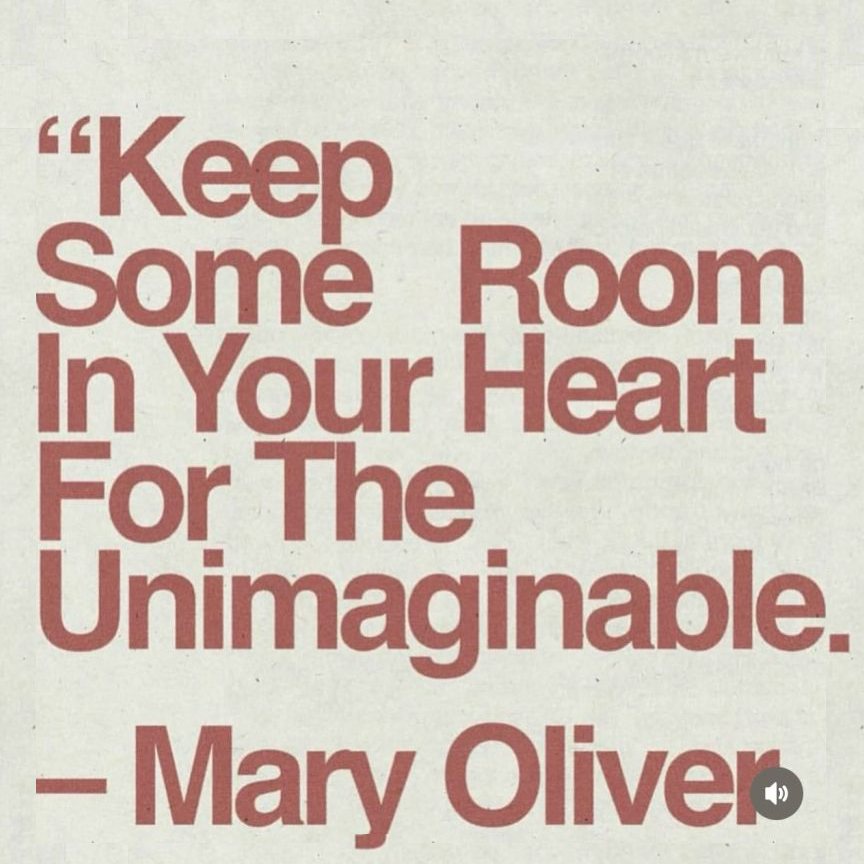
We’re seeing progress in so many areas of our lives – and we’re keeping space for the unimaginable to come true.
Let’s reclaim our attention, celebrate what’s working, and lead through uncertainty with the help of our resources below.
:: Image of the Week
:: Self-Leadership Development
The leadership skill we need most right now is not grit. It is reflection.
“I had confused momentum with meaning. I had been moving fast without ever stopping to examine whether the direction still made sense. And so, I kept setting new goals on top of unexamined old ones, wondering why nothing held. I was not unusual. I was the norm.”
According to a 2025 Forbes analysis of leadership burnout research, burned-out leaders are 34% less likely to outperform their peers, 3.5 times more likely to leave their roles and half as likely to feel engaged. We typically respond by recommending more grit. More resilience. Better time-blocking. Stronger accountability structures.
But what if we are solving the wrong problem?
Most leaders are pushing in directions they have never honestly examined. They are executing against goals set in planning sessions that skipped the most consequential question: What did the year behind us actually try to teach us?
“Be still, sad heart! And cease repining; Behind the clouds is the sun still shining; Thy fate is the common fate of all; into each life some rain must fall; some days must be dark and dreary.” – Henry Wadsworth Longfellow – The Rainy Day
Change the Song in Your Head with Claude Silver
Sometimes the most important leadership shift starts with changing the song in your own head.
Live from CultureCon 2026, Dr. Rod Berger sits down with Claude Silver, Chief Heart Officer at VaynerX, USA Today bestselling author of “Be Yourself at Work”, and a pioneer of people-first leadership. Claude shares how a 93-day Outward Bound experience helped her find her voice, challenge the limiting beliefs she carried for years, and ultimately recognize the kind of leader she was meant to become.
From building a culture rooted in empathy to taking accountability for how we show up, Claude explores why great leadership requires both heart and ownership. She also opens up about the trust that changed her career, the importance of knowing when you are not at your best, and why people should never have to shrink themselves to succeed at work.
:: Productivity and Innovation
How to reclaim your attention
We live in an age full of advice on how to stay focused. And yet, even with so many tips and tricks at hand, many of us still feel dispersed, as if our attention is being siphoned away by forces operating just beyond our awareness. What if the issue is not a lack of techniques, but an excess of cognitive noise?
https://psyche.co/guides/how-to-reclaim-your-attention
:: Work Culture & Team Development
Employers look for resilient staff – then leave them to burn out
“Resilience” is in danger of becoming a casualty of business buzzword bingo, but we know it matters. The World Economic Forum lists it as one of the most important skills for the future of work, and I’ve found it turns up on any list of key attributes, usually nestled under “attitude” or “personal effectiveness”.
Ask hiring managers which single quality determines success or failure in their new recruits, and many will cite resilience. One research interviewee said to me a lack of it is “the number one reason why hires don’t work in my team”.
Ask that same person how they build resilience in their group and vagueness creeps in. “You pick it up in the interview”, or it’s a “cultural fit”, they say. Most people don’t actually know how, so they wait and see who survives when things go wrong.
That’s where the trouble starts. Bosses select for a quality they have no plan to develop, then act surprised when people burn out under conditions they created. If resilience determines whether someone succeeds in a role, selecting for it while eroding it is close to self-sabotage.
https://theconversation.com/employers-look-for-resilient-staff-then-leave-them-to-burn-out-290463
“I make a point to appreciate all the little things in my life. I go out and smell the air after a good, hard rain. These small actions remind me that there are so many great, glorious pieces of good in the world.” ~ Dolly Parton
Why celebrating what’s working matters as much as fixing what isn’t
September has always had a bit of a “new year” feeling about it.
For many of us, starting a new school year every September has made it feel like a natural point for a fresh start. Summer ends, routines return, and there’s a sense of getting back to business with renewed energy.
At work, that can make September a good time to take stock. But at work, there’s a question we often forget to ask: What’s going well?
https://fridaypulse.com/insights/why-celebrating-whats-working-matters
:: CSN’s Book of the Week
Leadership Intelligence: Science-Backed Strategies for Mastering 21 Everyday Management Challenges
From the bestselling author of How to Have a Good Day, a powerful argument for developing the human strengths that will be vital for leading effectively in the age of AI.
In times of great change, great leadership is crucial—and our current times are no exception. Today, along with the demands that leaders have always faced—balancing short-term progress with long-term planning; delivering strong results without burning people out—we’re also in an era of major technological disruption. As that change accelerates, the instinct to lean hard into AI can feel more urgent than anything else.
But the best leaders know better. As AI capabilities become more universal, the leaders who stand out won’t be those who only use technology well—it will be those who can also draw out and develop the best of the human intelligence on their teams, by maximizing distinctly human strengths like critical thinking and interpersonal insight.
In Leadership Intelligence, economist and former McKinsey partner Caroline Webb shows readers how to rise to this challenge. Rooted in fresh insights from behavioral science, and brought to life by the personal stories of accomplished senior leaders, the book provides an integrated system of new frameworks and tools for mastering common workplace situations.
Built around three key strengths of an effective leader—making wise choices, inspiring people to perform at their best, and building resilience to ups and downs—Webb distills her decades of work advising senior executives into concrete guidance on 21 critical topics, including:
- How to make difficult decisions and tradeoffs
- How to strengthen team collaboration
- How to lead through uncertainty and upheaval
- How to give feedback that drives action
- and many more
Written in a clear, engaging style that makes it both useful and enjoyable, Leadership Intelligence is a powerful playbook that readers will return to as their roles and responsibilities grow—today and into whatever the next era holds.
“Victory is won not in miles but in inches. Win a little now, hold your ground, and later, win a little more.” – Louis L’Amour
:: Recognition and Appreciation
The Law of Reciprocity: Why We Remember the Smallest Gestures
Why do seemingly insignificant gestures leave such a lasting impression while experiences that are objectively bigger or more expensive fade from memory so quickly? The answer has less to do with hospitality than it does with how the human brain works.
When something thoughtful happens unexpectedly, our brains don’t simply register the object itself. They interpret the intention behind it. Was this automatic? Or did someone make a conscious effort just for me?
That distinction matters because it activates one of the brain’s oldest social instincts: reciprocity. When someone extends genuine kindness, our neural reward system responds. Oxytocin, often called the bonding hormone, increases, trust grows, and we experience a natural desire to return the favor. The law of reciprocity is one of the reasons humans have been able to build cooperative relationships for thousands of years.
See all of Melissa Hughes’s story on reciprocity here: https://www.melissahughes.rocks/post/law-of-reciprocity
:: Retirement Planning
Be wary of outside email solicitations
UW–Madison retirement resources should not be confused with email solicitations from 3rd party, lead-generation services for financial consultants. These external emails offer free consultations to UW employees. However, once someone submits their contact information, the sender sells it to an outside entity. We recommend that employees ignore emails from these lead-generation services and instead use the free resources available from UW–Madison and ETF. Please examine any emails you receive carefully to determine whether they are legitimate.
https://hr.wisc.edu/retirement/
:: Trust, Psychological Safety & Belonging
Culture in the Storm: How County Leaders Lead Through Uncertainty
Attention Extension Office Managers!!! This one is especially for you, but valuable to all leaders.
County leaders are navigating a lot right now: public pressure, policy shifts, workforce challenges, economic uncertainty, and nonstop change. The question is not whether the storm is here. It is how leaders respond inside it.
Join Heather R Younger, J.D., CSP®, Workplace Culture Expert, and a panel of county managers in this conversation.
The focus will be on what it takes to create and sustain a strong culture in county government when the pressure is high, and the path forward is not always clear. We will explore how leaders can remain steady, care well for their people, and strengthen trust, communication, and culture even in uncertain times.
Featuring voices from county leadership and local government innovation, this discussion will offer practical insights, honest perspectives, and meaningful ideas for leaders who want their culture to hold, even when conditions are hard.
https://www.linkedin.com/events/7447636450604462080
“Opportunity follows difficulty.” – Jim Rohn
:: Upcoming Events
Coaching Community of Practice (CCoP) October Meeting
People in diverse roles across campus utilize many different forms of coaching. The Coaching Community of Practice (CCoP) is a virtual space for leaders and learners, coaches and non-coaches from across campus. We offer resources, tools, and frameworks focused on coaching skills, engage in facilitated discussions, and utilize breakout rooms for peer conversations and coaching practice. As we build our capacity as leaders and coaches, we’re also strengthening the coaching culture across campus. Use this link to join our next CCoP on October 22nd from 12 – 1:00 pm CT: go.wisc.edu/u5qd32