Planners’ Picks — November 3, 2026

Welcome to YESvember! We’ve fallen back but keep moving forward. Even though the year is 5/6 done, you still have plenty of time to start something on your list! In this issue of PP, we manage up, work on our active listening, and sort through our worries.
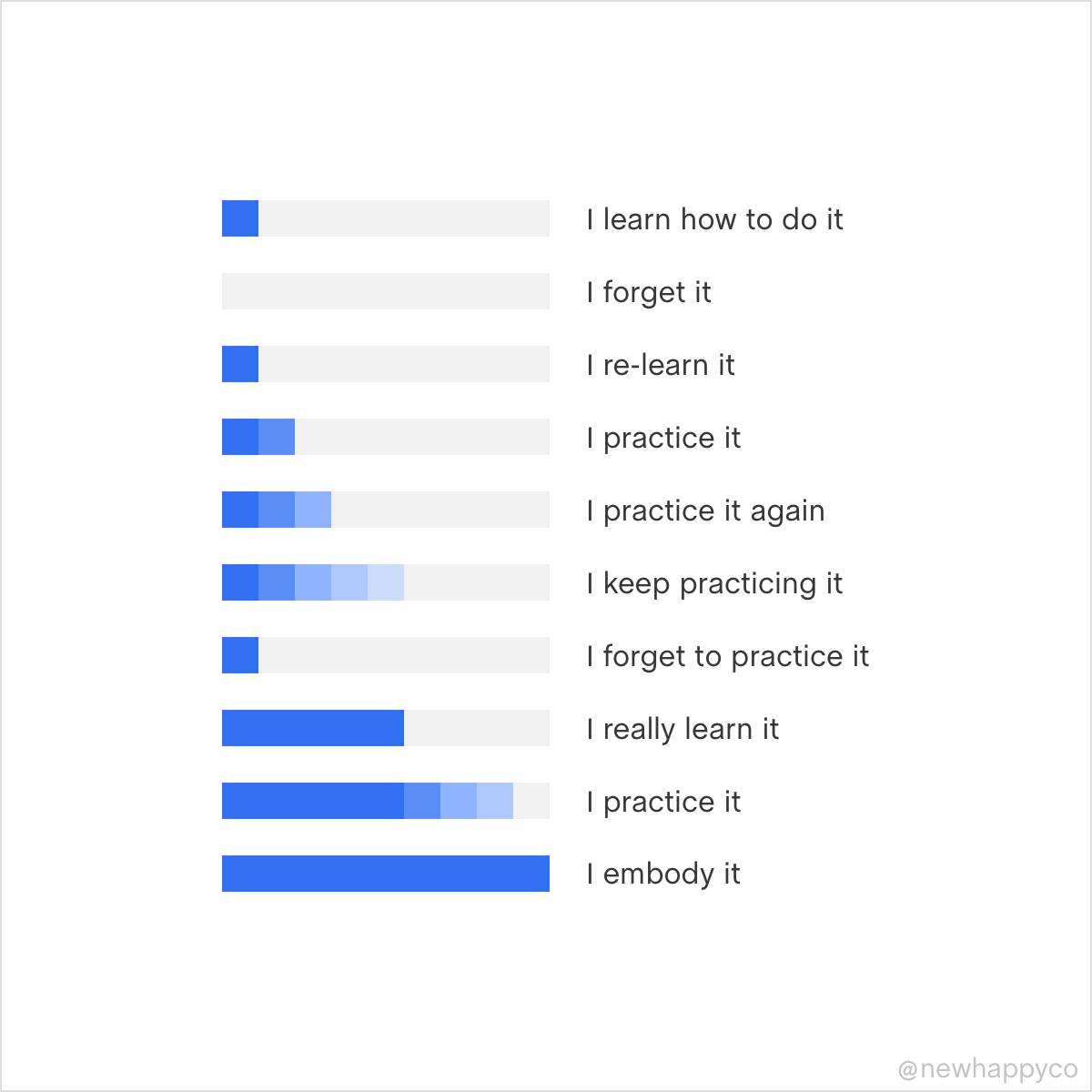
:: Image of the Week
:: CSN’s Book of the Week
Humble Inquiry, 3rd Edition: The Gentle Art of Asking Instead of Telling
Edgar Schein, Peter Schein, Michael Bungay Stanier
In an increasingly divisive era where communication is often dominated by assertiveness and directive leadership, this bestselling guide offers a refreshing and essential perspective on the power of asking instead of telling. This updated 3rd edition offers practical advice for how to build relationships based on curiosity and foster collaboration and trust between team members.
Lessons in this book will help you:
*Build healthy relationships with people from different occupational, professional, and national cultures
*Create psychologically safe work climates that allow people to feel safe to share what they know
*Foster teamwork and bust hyper-competitiveness through open communication, trust, and coordination
In this new edition, updates have been made to 30% of the book that delves into the fresh challenges inherent in today’s workplace, including new stories and case examples as well as an entire additional chapter with a focus on humble inquiry in the context of remote and hybrid work.
:: Communication
10 Sentences Emotionally Intelligent People Use
When you handle conversations poorly, you close doors that have nothing to do with the original disagreement. Your anger and defensiveness can damage relationships and push people away. High EQ individuals understand their emotions leave a lasting impact. They don’t just try to keep the peace. Rather, they protect the relationships they value most.
Travis has a nice list of sentences to use when under pressure. These also apply in active listening situations!
“They tried to bury us. They didn’t know we were seeds.” ~ Greek poet Dinos Christianopoulos, sharing a message on resilience.
A Key Tactic for Way Better Conversations, with Alison Wood Brooks
We all know someone who always can keep a conversation interesting and relevant. In this episode, Alison teaches us that often this isn’t an accident – many great conversationalists show up prepared.
Key action: Take 60 seconds before a conversation to determine 2-3 key topics you can bring. This will provide you with a roadmap on where to go, help you adapt in the moment, and build confidence.
https://www.youtube.com/watch?v=fgeBclMl8fU
What Great Listeners Actually Do
Chances are you think you’re a good listener. People’s appraisal of their listening ability is much like their assessment of their driving skills, in that the great bulk of adults think they’re above average.
In our experience, most people think good listening comes down to doing three things:
- Not talking when others are speaking
- Letting others know you’re listening through facial expressions and verbal sounds (“Mmm-hmm”)
- Being able to repeat what others have said, practically word-for-word
In fact, much management advice on listening suggests doing these very things – encouraging listeners to remain quiet, nod and “mm-hmm” encouragingly, and then repeat back to the talker something like, “So, let me make sure I understand. What you’re saying is…” However, recent research that we conducted suggests that these behaviors fall far short of describing good listening skills.
https://zengerfolkman.com/articles/great-listeners
:: Coaching
Handle Hard Better
One of the biggest mistakes we can make is believing that #life will get easier once we get through the difficult part.
Once we finish school. Once we get the promotion. Once the #business is established. Once the children are older. Once we reach the next milestone.
But what if the goal isn’t to make life easier? What if it’s to become better equipped to meet whatever life brings?
I came across this powerful message from Kara Lawson, basketball coach and former professional player, and I think it applies far beyond sports.
In leadership, #business, #relationships, and personal growth, meaningful pursuits will challenge us. Waiting for those #challenges to disappear can keep us waiting a very long time.
The more useful question might be: What is this experience teaching me about the person I am becoming?
Watch the video and consider where you might be waiting for things to get easier in your own life.
:: Developing Better Habits
What if we defined success every day?
When we think of “success”, we often think big and broad — a successful life, a successful career, the culmination of years of work. But what if we measured success in smaller, more tangible ways? Could that help us manage our time and energy better? See this story and suggestion from Jason Feifer on managing success (and taking breaks from work) on a micro scale.
https://www.jasonfeifer.com/how-to-take-a-break-from-work-without-feeling-guilty/
“People say nothing is impossible, but I do nothing every day.” ~ Winnie the Pooh
:: Self-Leadership Development
Great leadership is about creating the conditions for people and possibilities to take shape.
I love this comparison that Rachel Salzberg shares about doing new things and opening herself up to vulnerability when she took on turning clay as a hobby. In turn, she’s training her brain to be open to failures, setbacks, and curiosity.
“When we slow down, stay curious, and create space for mistakes and learning, something different becomes possible.”
https://www.linkedin.com/feed/update/urn:li:activity:7519023479740841984
:: Recognition and Appreciation
If it wasn’t for you…
Think of someone you rely on. When was the last time you actually told them?
When we asked people to share moments when they most felt that they mattered at work, one of the most common answers was surprisingly simple:
Someone showed them how they were uniquely needed.
On the other hand, people who tended to disengage, withdraw, and languish often said things like: “No one would miss me if I were gone.” “They could replace me with anyone.” “I’m just a number.”
Today, finish this sentence for someone: “If it wasn’t for you…”
You might be the reason they remember that they matter and stay.
People show up where they’re needed.
Found at Zach Mercurio’s LinkedIn post: https://lnkd.in/p/gb49xpX5
:: Managing Up
The problem we have is: our managers won’t manage.
I was sitting in a meeting with a senior HR leader in a large organization. We were discussing a culture change initiative that I was playing a small part in, discussing the challenges faced by some of her staff, when she said something that stuck with me. It was something like this:
‘Of course, in reality, so many of our problems are caused because managers won’t manage.’
And as soon as you hear (or read) a sentence like that, you know it’s true.
Because everyone has been managed by a manager who wouldn’t manage. And if we’re honest, most of us have been that at some point.
https://www.linkedin.com/pulse/problem-we-have-our-managers-wont-manage-robbie-swale-ja88e
“The most common way people give up their power is by thinking they don’t have any.” – Alice Walker
:: LinkedIn Learning
Practical Leadership Skills
Leadership today demands more than authority. In a hybrid, high-stakes world, the leaders who succeed treat agility and adaptability as non-negotiable skills. In this course, learn how to build a modern leadership toolkit for leading through uncertainty.
Instructor Kwame Christian shows you how to strengthen your presence to earn trust and lead with authenticity and deliver honest conversations that pair clarity with kindness. Along the way, get tips on fostering psychological safety to improve team dynamics and outcomes, leading through influence rather than authority, and using negotiation tactics that build collaboration and buy-in. Kwame also shares insights on recognizing your own needs for recovery so you can lead sustainably without burnout.
Whether you’re a mid-level manager, senior manager, or director, this course equips you with practical tools to lead effectively in demanding environments. This course was created by Kwame Christian. We are pleased to host this training in our library.
Managing Stress in an Always-On Workplace
In a workplace defined by machine-speed expectations and the constant hum of digital debt, traditional time management is no longer enough. To thrive in 2026, professionals must evolve from managing their calendars to regulating their nervous systems. Join Melody Wilding, LMSW and creator of the Sensitive Striver framework, for a comprehensive guide to navigating the unique stressors of the AI-integrated, hybrid world. This course goes beyond surface-level advice, diving into the intersection of technological change and emotional resilience. Learn how to identify AI-anxiety triggers, practice on-camera Somatic labs for immediate stress reduction, and master the art of human-speed critical thinking. Whether you are feeling the pressure of being “always on” or struggling to maintain boundaries in a digital-blur environment, this course provides the tools to reclaim your focus, your well-being, and your purpose.
:: Mental Health and Self Care
Sort worries into two buckets
Bestselling psychologist Wayne W. Dyer suggested in his talks and writings that we sort all our worries into two buckets: the things we have control over and the things we don’t. He then said this (I’m paraphrasing from one of his talks):
Why worry about the things you have no control over? If you have no control over them, there’s no point in worrying. But also, why worry about things that you DO have control over? If you have control over the problem, why worry? Just get started making it better. Now, you’ve just eliminated every possible thing you could worry about.
Overly simplistic? Sure. Does it sidestep the real pain and emotion of worry? Yep.
Still helpful as a starting point? Yes. I’ve tempered many worries over the years by simply identifying which of these two buckets something falls into.
:: Upcoming Events
Managing Your Emotions – Prof Ethan Kross
Who’s in charge: you or your emotions?
We can’t stop difficult feelings from arriving – frustration, worry, anger, and sadness are all part of being human. However, although we can’t choose what we feel, we have more control than we realize over what happens next.
At this special event, leading emotion scientist Professor Ethan Kross will share insights from his bestselling book Shift. He’ll explore why some of the most powerful ways to change how we feel are outside our heads, and why building your toolkit in the calmer times means you’re ready when the storm hits.
Ethan will guide us through some of his favorite tools. These include coaching yourself through tough moments with distanced self-talk, finding the sights, sounds and tastes that reliably lift your mood, and working out who to turn to when you’re struggling. Whether you’re going through something big or just the ups and downs of everyday life, this event will leave you with simple, science-backed tools you can use straight away.
Date: November 10, 2026
Time: 1:00-2:00 pm CST
https://actionforhappiness.org/managing-your-emotions
Understanding Your Identities and Experiences
Each of us brings a unique blend of experiences, identities, and values to the workplace—and they shape how we see the world, interact with others, and how we participate and contribute to our teams. In this course, you’ll have the opportunity to reflect on your own experiences, identities, and values and consider how they influence workplace interactions, culture, and perceptions. You will also explore how these factors can shape our assumptions and perspectives. Finally, you’ll be introduced to a practical tool designed to check for and navigate assumptions effectively.
Why should you attend:
- Explore your individual experiences, identities, and values.
- Build awareness of how identities, experiences, and values shape perceptions and workplace dynamics.
- Learn how to check for assumptions.
Part of the Thrive@UW Program , open to all UW–Madison employees. Select Offerings to determine which dates are virtual and which will be held in a classroom;
Dates: November 5 (in-person), December 3 (online)
Introducing SEAT: UW–Madison’s Change Management Framework
Change is a constant at UW–Madison, and supervisors often play an important role in helping employees understand and navigate what is changing. Whether the change involves a new process, technology, policy, organizational structure, or way of working, how people experience and respond to change can have a significant impact on successful adoption.
Developed collaboratively with campus partners, SEAT (Stage, Engage, Act, Thrive) is UW–Madison’s practical Change Management Framework and Toolkit. In this session, participants will take a closer look at the framework, explore the tools and resources included in the toolkit, and consider how SEAT can help them think through and support the people side of change.
In this interactive session, participants will:
- Explore the four stages of the SEAT Framework and how they can be applied to different types of change.
- Discover practical tools and resources in the Change Management Toolkit that can help leaders and teams navigate the people side of change.
- Consider how SEAT can help them prepare, engage, and support employees through changes affecting their teams.
Presented by Jen Erickson of the Office of Strategic Consulting.
Date: November 19, 2026
Time: 10:00-11:00 am
Online via Zoom Link