Planners’ Picks — October 6, 2026

What are you looking for? Those who see the silver linings are usually the ones looking for them.
Where’s your sweet spot? The best zone is somewhere in the middle.
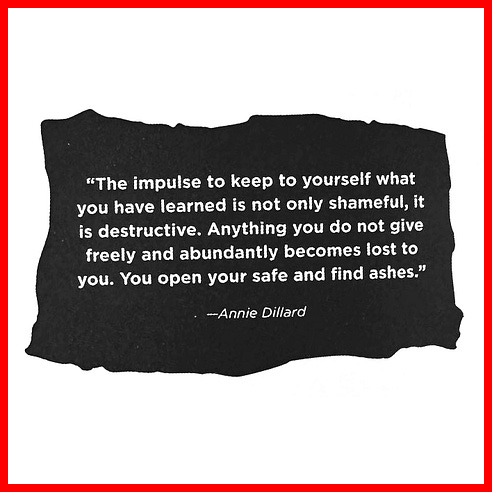
What are you holding back that you should share with the world? Don’t allow your gifts to be lost.
:: Image of the Week
:: Burnout & Stress
The Goldilocks Principle: Finding the Sweet Spot Between Burnout and Boredom
It’s no secret that too much stress is bad: physically, cognitively, emotionally. It leads to burnout, overwhelm, and deteriorating performance. But here’s the twist: too little challenge can be just as damaging. Under-stimulation breeds boredom, disengagement, and stagnation.
The Goldilocks Principle reminds us: the best zone is the one that’s just right. Dr. Melissa Hughes explains how to play in that zone more.
“The most common way people give up their power is by thinking they don’t have any.” – Alice Walker
:: Self-Leadership Development
The objective is not to be the best; it’s to get better
Adam Grant tells us that perfectionism stems from unreasonably demanding expectations and unduly harsh criticism. To counter perfectionism, here are some basic messages that parents, teachers, and coaches can reinforce:
1. Mistakes don’t make you a failure. They make you a learner.
2. Achievements are not a symbol of your worth. They’re a snapshot of your performance.
3. Beating yourself up doesn’t make you stronger; it leaves you bruised. Don’t say anything to yourself that you wouldn’t say to a good friend.
4. It’s impossible to please everyone. Decide whose opinion matters to you—and whose doesn’t.
5. Character is not revealed by how many setbacks you face. It’s forged by how you face them.
6. People gauge your competence mostly by your hits, not your misses.
7. The objective is not to be the best; it’s to get better. The person you’re competing with is your past self, and the bar you’re setting is for your future self.
8. Our biggest regrets aren’t actions—they’re inactions. Don’t set yourself up to wish you’d taken more chances.
9. Healthy goals include two targets: an aspirational result and an acceptable outcome. If you fall anywhere between them, you haven’t failed.
10. Success is not a straight line. It’s a squiggly line.
For more on combating perfectionism, see Self-Compassion by Kristin Neff, The Gifts of Imperfection by Brené Brown, The Perfection Trap by Thomas Curran, and Adam Grant’s podcast on breaking up with perfectionism.
Found in Adam Grant’s Substack newsletter:
“I find the great thing in this world is not so much where we stand, as in what direction we are moving.” — Oliver Wendell Holmes Sr.
What Makes Great Leaders?
Across time, nations, and industries, the best long-term leaders have exhibited the same six characteristics:
- Resilient Effort
- Growth Mindset
- Integrity and Trust
- Accessibility
- Stewardship
- Results
See what Rishad has to say about each of these characteristics in his recent newsletter.
:: CSN’s Book of the Week
The Things You Can See Only When You Slow Down: How to Be Calm in a Busy World
The world moves fast, but that doesn’t mean we have to. This bestselling mindfulness guide by Haemin Sunim (which means “spontaneous wisdom”), a renowned Buddhist meditation teacher born in Korea and educated in the United States, illuminates a path to inner peace and balance amid the overwhelming demands of everyday life.
By offering guideposts to well-being and happiness in eight areas—including relationships, love, and spirituality—Sunim emphasizes the importance of forging a deeper connection with others and being compassionate and forgiving toward ourselves. The more than twenty full-color illustrations that accompany his teachings serve as calming visual interludes, encouraging us to notice that when you slow down, the world slows down with you.
“It is good to have an end to journey towards; but it is the journey that matters, in the end.” – Ursula K. Le Guin
:: Recognition and Appreciation
Seek & Find
“Those who see the silver linings are usually the ones looking for them.” – Jason Kotecki
Jason Kotecki writes in his newsletter: I once wrote a book about seeing. In it, I talked about storms, the metaphorical kind that blow through our lives. I also wrote about one of our most underrated superpowers: the ability to choose what we look for in the midst of those storms. Yes, the storms will come. Scary, devastating, faith-shaking storms. They are a given, right up there with death and taxes and missing socks.
But those who see the silver linings are usually the ones looking for them. It’s not a talent; it’s a practice. The more you practice, the better you get.
What are you looking for? I promise, you will find it.
https://escapeadulthood.com/art/seek-find/
:: Coaching
Before You Address Poor Performance: 4 Questions to Diagnose Root Cause
Someone on your team isn’t performing the way you need them to.
You’ve reminded them about the deadline. Explained why the work matters. Maybe you’ve offered more support, checked in more frequently, or quietly completed part of the work yourself to keep things moving.
And now you’re frustrated.
You care about this person and want them to succeed. You also care about the rest of the team—the people compensating for missed commitments, correcting mistakes, or wondering why you haven’t addressed what everyone can see.
And you don’t want to make an unfair assumption. You also can’t let the poor performance continue.
When performance slips, your mind naturally starts creating explanations:
They don’t care. Aren’t capable. Have a bad attitude…
One of those explanations MIGHT be true. But poor performance is a symptom. Your first interpretation isn’t always the right diagnosis.
“We must all suffer one of two things: the pain of discipline or the pain of regret.” – Jim Rohn
:: Courage
You Will Always Have the Capacity to Dream a Little Bigger
One of my coaches did a thing I really liked on a call earlier in the year. He had those of us on the call breathe in deeply, and then ‘take another sip’: another little breath.
It turns out that when we take a deep breath in, we rarely breathe in all the way. We think we have, but we haven’t. There’s always space for a little more.
The same goes for our dreams and aspirations…
https://www.linkedin.com/pulse/you-always-have-capacity-dream-little-bigger-robbie-swale-wlhie
“Your job, throughout your entire life, is to disappoint as many people as it takes to avoid disappointing yourself.” – Glennon Doyle
What Does It Mean to Be Brave in Your Relationships?
We think of courage as something that happens on battlefields or in moments of physical danger. But some of the bravest acts happen in ordinary conversations, in quiet moments when we choose honesty over comfort, truth over peacekeeping, authenticity over approval. See Dennis Pitocco’s thoughts here: https://www.bizcatalyst360.com/what-does-it-mean-to-be-brave-in-your-relationships/
https://www.bizcatalyst360.com/what-does-it-mean-to-be-brave-in-your-relationships
:: Communication
Close Meetings Like a Leader
Most people who want to get noticed in meetings think they need to talk more.
Talking a lot mostly proves you like talking, and it’s hard to pull off if you’re on the quieter side.
Dorie Clark taught communication at Duke and Columbia, and there’s a simpler move she calls the closing technique.
Regardless of your level in the organization, use this for your next meeting.
:: Upcoming Events
The Power of Limits: How Constraints Drive Genius with David Epstein
Join us for an inspiring virtual conversation with bestselling author David Epstein as we explore his latest book, Inside the Box, and redefine how to approach our greatest challenges!
We are constantly told to “think outside the box” to innovate, solve complex problems, and reach our goals. But what if the secret to true breakthrough creativity and peak performance actually lies in working within our limitations? In Inside the Box, David Epstein draws on science, research, and fascinating real-world case studies to demonstrate how constraints, boundaries, and structure can become powerful catalysts for ingenuity and mastery. Epstein challenges traditional ideas about skill acquisition, focus, and problem-solving, revealing how top performers and innovators across industries turn rigid limits into unmatched strengths.
Register now to learn how to reframe everyday obstacles and apply science-backed performance strategies to your career and personal life.
Date: October 13, 2026
Time: 1:00-2:00 pm CST
Location: online
https://libraryc.org/midlibrary/210986?uMarketingSource=_LSC_ME_09_2
Coaching Community of Practice (CCoP) October Meeting
People in diverse roles across campus utilize many different forms of coaching. The Coaching Community of Practice (CCoP) is a virtual space for leaders and learners, coaches and non-coaches from across campus. We offer resources, tools, and frameworks focused on coaching skills, engage in facilitated discussions, and utilize breakout rooms for peer conversations and coaching practice. As we build our capacity as leaders and coaches, we’re also strengthening the coaching culture across campus.
Use this link to join our next CCoP on October 22nd from 12 – 1:00 pm CT: go.wisc.edu/u5qd32
“One of the things that I love is focusing on the process over the prize.” – Rory McIlroy
Introducing SEAT: UW–Madison’s Change Management Framework
Change is a constant at UW–Madison, and supervisors often play an important role in helping employees understand and navigate what is changing. Whether the change involves a new process, technology, policy, organizational structure, or way of working, how people experience and respond to change can have a significant impact on successful adoption.
Developed collaboratively with campus partners, SEAT (Stage, Engage, Act, Thrive) is UW–Madison’s practical Change Management Framework and Toolkit. In this session, participants will take a closer look at the framework, explore the tools and resources included in the toolkit, and consider how SEAT can help them think through and support the people side of change.
In this interactive session, participants will:
- Explore the four stages of the SEAT Framework and how they can be applied to different types of change.
- Discover practical tools and resources in the Change Management Toolkit that can help leaders and teams navigate the people side of change.
- Consider how SEAT can help them prepare, engage, and support employees through changes affecting their teams.
Presented by Jen Erickson of the Office of Strategic Consulting.
Jen’s Bio
Jenny Erickson has more than 20 years of experience in community, organizational, and leadership development. As Capacity Building Lead in UW–Madison’s Office of Strategic Consulting, she develops learning experiences and practical tools that help campus teams lead change, strengthen performance, and build healthy workplace cultures. Previously, Jenny served as a professor and community development educator with UW–Madison Division of Extension, partnering with organizations to identify needs, develop solutions, and evaluate impact.
Date: November 19, 2026
Time: 10:00-11:00 am
Online via Zoom Link